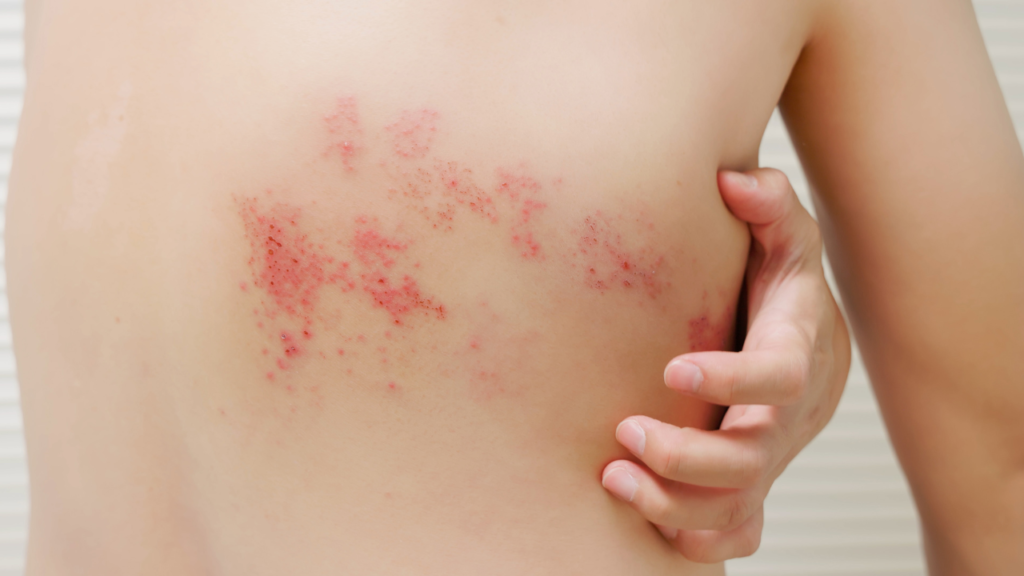
Shingles is a painful infection caused by the varicella-zoster virus, the same virus that causes chickenpox. After someone has chickenpox, the virus remains inactive in the body and can reactivate years later. This reactivation causes shingles, also called herpes zoster. The illness usually produces pain followed by a rash on one side of the body.
Shingles can happen to anyone who has had chickenpox, but the risk increases with age. It is also more common in people whose immune systems are weakened. Most people recover, but some develop complications that can last much longer than the rash. Early medical treatment and vaccination can reduce the risk of serious problems.
What Is Shingles?
Shingles occurs when the varicella-zoster virus reactivates. After chickenpox, the virus remains in nerve tissue rather than being completely removed from the body. It can remain inactive for many years before reactivating. When it becomes active, it travels along a nerve toward the skin and causes the characteristic rash.
The rash usually appears in a limited area on one side of the body. It often forms a band or stripe of small blisters. The affected area can be extremely sensitive to touch, and pain may begin before the rash becomes visible.
What Causes Shingles?
The cause is the reactivation of the varicella-zoster virus. A person does not catch shingles from someone else in the same way they catch a cold. Instead, shingles develops when the virus already present in the body becomes active again.
Doctors do not always know exactly why the virus reactivates. Age-related changes in immune protection are one important factor. Certain diseases and medicines that weaken the immune system can also increase the risk.
Who Is Most at Risk?
Anyone who has had chickenpox can potentially develop shingles. The risk rises substantially with age, particularly after age 50. People with weakened immune systems are also more likely to develop shingles or experience complications.
Risk factors include:
- Being 50 or older
- Having had chickenpox
- Having a weakened immune system
- Certain cancers
- HIV infection
- Some immune-suppressing medicines
- Cancer treatments such as chemotherapy
- Long-term use of certain steroids
Having a risk factor does not mean that someone will definitely develop shingles.
How Common Is Shingles?
Shingles is relatively common. The CDC estimates that about 1 in 3 people in the United States will develop shingles during their lifetime. About 1 million cases occur in the United States each year.
A recent study published in Skin Health and Disease reviewed 474 patients with shingles from two periods, 2012–2013 and 2022–2023. The study found that the average age remained about 58 years, while the later group had more underlying diseases and complications.
Early Signs of Shingles
Pain is often the first sign of shingles. It may feel like burning, tingling, itching, or extreme sensitivity in one small area. The discomfort can appear several days before the rash.
Because the pain may occur before the skin changes, shingles can sometimes be confused with other conditions. Pain in the chest, abdomen, or back can be particularly confusing. A healthcare professional can help determine the cause.
Early symptoms may include:
- Burning
- Tingling
- Itching
- Sharp pain
- Skin sensitivity
- Headache
- Fatigue
- Fever
What Does the Shingles Rash Look Like?
The rash usually appears after the initial pain. It commonly develops as red patches followed by small, fluid-filled blisters. The blisters eventually break open, dry, and form scabs.
The rash usually stays on one side of the body. It often follows the path of a nerve and does not cross the body’s midline. The chest, back, face, and neck are common locations.
| Stage | What may happen |
|---|---|
| Early stage | Pain, tingling, burning, or itching |
| Rash begins | Red or irritated skin |
| Blister stage | Fluid-filled blisters appear |
| Healing stage | Blisters dry and form crusts |
| Recovery | Skin gradually heals |
Can Shingles Occur Without a Rash?
Yes. Some people experience shingles-related nerve pain without developing the typical rash. This can make diagnosis more difficult.
A person may have burning or severe localized pain without an obvious skin change. If unusual nerve pain develops, particularly in someone who has previously had chickenpox, medical evaluation may be appropriate.
Where Does Shingles Usually Appear?
Shingles can occur almost anywhere on the body. It most commonly affects the chest and back, but it can also affect the face, neck, or other areas.
The rash generally follows one or more nearby nerve pathways. This is why it often appears as a stripe or band rather than being spread evenly across the body.
Shingles on the Face
Shingles on the face requires particular attention. If the rash develops near the eye, the virus can affect structures of the eye and potentially threaten vision.
A rash around the eye should be evaluated promptly. Do not wait for the rash to disappear on its own. Early treatment may reduce the risk of serious eye complications.
Seek prompt medical care if you have:
- A rash near the eye
- Eye pain
- Vision changes
- Severe headache
- Facial weakness
- Hearing changes
- Severe dizziness
These symptoms can signal complications that require urgent evaluation.
Shingles Around the Ear
Shingles can sometimes affect nerves around the ear. This can cause ear pain, hearing problems, dizziness, or facial weakness.
One serious form is known as Ramsay Hunt syndrome. It can involve shingles around the ear along with facial paralysis. Prompt medical treatment is important when these symptoms occur.
Is Shingles Contagious?
Shingles itself is not spread from one person to another as shingles. However, a person with active shingles can transmit the varicella-zoster virus to someone who has never had chickenpox or the chickenpox vaccine.
That person would develop chickenpox, not shingles. Transmission usually occurs through direct contact with fluid from open shingles blisters.
A person with shingles is generally considered contagious until the blisters have crusted over. During this time, keeping the rash covered and avoiding contact with people who are especially vulnerable can reduce the chance of transmission.
Who Should Avoid Contact With Shingles?
Until the blisters have crusted, people with shingles should take extra care around:
- Pregnant people who are not immune to chickenpox
- Newborn babies
- People with weakened immune systems
- People who have never had chickenpox or the vaccine
The goal is to prevent these people from being exposed to the virus.
How Is Shingles Diagnosed?
Doctors can often diagnose shingles by examining the rash and asking about the symptoms. The combination of one-sided pain and a characteristic blistering rash is often enough to identify the condition.
If the diagnosis is uncertain, a sample from a blister can be tested in a laboratory. PCR testing can be particularly useful when confirmation is needed.
Why Early Diagnosis Matters
Shingles treatment is most useful when started early. Antiviral medicines can shorten the illness and reduce the risk of certain complications.
Research and clinical guidance commonly emphasize beginning antiviral treatment as soon as possible, particularly within the first 72 hours after symptoms begin. Treatment may still be considered later in some situations, especially when new blisters are appearing or complications are present.
Treatment for Shingles
There is no medicine that completely removes the virus from the body. Treatment focuses on stopping the virus from multiplying, reducing pain, and preventing complications.
Prescription antiviral medicines commonly used for shingles include acyclovir, famciclovir, and valacyclovir. They work best when started early.
| Treatment | Main purpose |
|---|---|
| Antiviral medicine | Slow viral activity and shorten illness |
| Pain relievers | Reduce pain |
| Numbing medicines | Provide local pain relief |
| Certain nerve-pain medicines | Help control persistent nerve pain |
| Cool compresses | Ease itching and discomfort |
| Medical follow-up | Monitor for complications |
Treatment should be chosen according to the person’s age, health conditions, medications, and symptoms.
Antiviral Medicines
Antiviral medicines are commonly prescribed for shingles. Examples include acyclovir, valacyclovir, and famciclovir.
These medicines can help speed healing and reduce the risk of complications. They are most effective when started early, so suspected shingles should not be ignored while waiting for the rash to worsen.
A healthcare professional should determine which medicine and dose are appropriate.
Managing Shingles Pain
Shingles pain can range from mild irritation to severe nerve pain. Over-the-counter pain relievers may help some people, while others require prescription treatment.
For severe pain, healthcare professionals may use medicines such as gabapentin, certain antidepressants, lidocaine preparations, or other treatments. The choice depends on the type and severity of pain.
Do not combine several pain medicines without checking whether they are safe together.
Cool Compresses for Comfort
Cool, wet compresses may help reduce itching and discomfort. A cool bath can also provide temporary relief.
Avoid scratching the blisters. Scratching can damage the skin and increase the risk of bacterial infection.
Simple skin-care measures include:
- Keep the rash clean.
- Keep the area dry.
- Use cool, wet compresses.
- Avoid scratching.
- Keep the rash covered when appropriate.
- Wash your hands after touching the affected area.
- Avoid sharing towels or clothing that may contact the rash.
How Long Does Shingles Last?
Shingles usually improves over several weeks. Mayo Clinic reports that the illness generally lasts between two and six weeks, although individual recovery times vary.
New blisters may appear for several days before the rash begins to dry. Most people eventually recover without major complications. Some people, however, continue to experience nerve pain after the skin has healed.
What Is Postherpetic Neuralgia?
Postherpetic neuralgia is the most common long-term complication of shingles. It occurs when nerve fibers damaged by the virus continue sending pain signals after the rash has disappeared.
The pain may feel burning, sharp, aching, or extremely sensitive to touch. It can last for months and, in some people, much longer.
The risk increases with age, particularly among older adults. Early treatment of shingles may reduce the chance of developing this complication.
Other Possible Complications
Most people recover from shingles without serious problems. However, complications can occur, especially in older adults and people with weakened immune systems.
Possible complications include:
- Postherpetic neuralgia
- Eye problems
- Vision loss
- Facial paralysis
- Hearing problems
- Balance problems
- Brain inflammation
- Bacterial skin infection
- Pneumonia
- Widespread shingles
Serious complications are uncommon, but symptoms involving the eyes, brain, ears, or nervous system require prompt medical attention.
Shingles and Vision
Shingles affecting the eye is called herpes zoster ophthalmicus. It can cause inflammation and infection in different parts of the eye.
Possible symptoms include eye pain, redness, sensitivity to light, and changes in vision. Without appropriate treatment, serious eye damage can occur.
If shingles appears on the forehead, nose, eyelid, or around the eye, contact a healthcare professional promptly.
Shingles and the Nervous System
Because the varicella-zoster virus travels along nerves, shingles can sometimes affect the nervous system. Most cases remain limited to the skin and nearby nerves.
Rare complications can include inflammation of the brain or other neurological problems. Severe headache, confusion, neck stiffness, weakness, or other sudden neurological changes require urgent medical attention.
Shingles in People With Weakened Immune Systems
People with weakened immune systems have a higher risk of shingles and complications. This includes some people with cancer, HIV infection, or conditions requiring immune-suppressing medicines.
In these individuals, shingles may spread beyond the usual area. It can also be more severe.
Anyone with a weakened immune system who develops a painful rash or unexplained nerve pain should seek medical advice promptly.
Can Stress Cause Shingles?
Stress is sometimes discussed as a possible trigger for shingles. However, it is difficult to prove that stress directly causes an outbreak.
The better-established risk factors are age and weakened immune function. Stress management can still be useful because it supports overall well-being during illness.
Can You Get Shingles More Than Once?
Yes. Having shingles once does not guarantee lifelong protection against another episode.
Most people experience shingles only once, but it can occur again. Repeated episodes may be more likely in people with weakened immune systems.
Can Young People Get Shingles?
Young people can develop shingles, but it is less common than in older adults. Children who develop shingles may have particular risk factors, including certain immune problems or exposure to the virus very early in life.
A painful, one-sided blistering rash in a child should be evaluated rather than assumed to be an ordinary skin irritation.
Shingles Prevention
Vaccination is the best way to reduce the risk of shingles. In the United States, the recombinant zoster vaccine, Shingrix, is recommended for adults aged 50 and older and for adults aged 19 and older who have weakened immune systems because of disease or treatment.
The vaccine is given as a two-dose series. The usual interval is two to six months, although specific recommendations can vary in certain situations.
| Group | U.S. Shingrix recommendation |
|---|---|
| Adults 50+ | 2 doses |
| Adults 19+ with certain immune problems | 2 doses |
| People who previously had shingles | Vaccination can still be recommended |
| People who previously received Zostavax | Shingrix may still be recommended |
Current vaccination recommendations should be confirmed with a healthcare professional because individual circumstances can affect timing.
Can You Get the Shingles Vaccine After Shingles?
Yes. Having shingles does not necessarily mean you should skip vaccination.
The vaccine is intended to reduce the chance of future shingles and complications. Your healthcare professional can advise when vaccination is appropriate after an episode.
The vaccine does not treat an active shingles outbreak.
Shingles Vaccine Side Effects
Shingrix can cause temporary reactions. Common effects include soreness, redness, or swelling at the injection site.
Some people also experience tiredness, headache, muscle aches, fever, or other short-term symptoms. These effects usually resolve without lasting problems.
Discuss vaccination with your healthcare professional if you have questions about allergies, pregnancy, immune conditions, or previous vaccine reactions.
Shingles and Diet
There is no special food or diet proven to cure shingles. During an illness, however, eating enough nutritious food and drinking adequate fluids can support general health.
Simple meals may be easier to manage if you have a poor appetite. Focus on foods that provide protein, fruits, vegetables, whole grains, and other nutrients you normally tolerate.
Diet should complement medical treatment rather than replace antiviral medicine or professional care.
Foods That Support General Health
A balanced eating pattern can provide nutrients needed for normal immune function and recovery. There is no need to follow a restrictive “shingles diet” unless another medical condition requires one.
Useful foods can include:
- Eggs
- Fish
- Chicken
- Beans
- Lentils
- Yogurt
- Fruits
- Vegetables
- Whole grains
- Nuts and seeds
- Adequate fluids
These foods support general nutrition but should not be described as treatments for the virus.
Shingles and Sleep
Pain and itching can make sleep difficult. Poor sleep can then make it harder to cope with discomfort during recovery.
Keeping a regular sleep schedule may help. A cool room, comfortable clothing, and appropriate pain management may also make nighttime symptoms easier to handle.
If severe pain repeatedly prevents sleep, tell your healthcare professional.
When Should You See a Doctor?
Contact a healthcare professional as soon as you suspect shingles. Early antiviral treatment can be beneficial, especially when started soon after symptoms begin.
Prompt evaluation is especially important if:
- You are 50 or older.
- The rash is near an eye.
- You have a weakened immune system.
- The rash is widespread.
- The pain is severe.
- You have facial weakness.
- You have hearing or balance problems.
- You develop vision changes.
These situations can carry a greater risk of complications.
When Is Shingles an Emergency?
Some symptoms require urgent or emergency medical care. These include vision changes, severe eye pain, confusion, severe headache, neck stiffness, muscle weakness, or paralysis.
A widespread rash in someone with a weakened immune system can also require urgent assessment. Do not wait for these symptoms to improve on their own.
Shingles: A Simple Recovery Checklist
| Goal | Helpful action |
|---|---|
| Get treatment early | Contact a healthcare professional promptly |
| Protect the skin | Keep the rash clean and avoid scratching |
| Reduce discomfort | Use recommended pain relief and cool compresses |
| Prevent spread | Cover the rash and avoid contact with vulnerable people |
| Support recovery | Eat well, drink fluids, and rest |
| Watch for complications | Monitor the eyes, ears, nerves, and pain |
| Prevent future episodes | Ask about Shingrix if eligible |
Frequently Asked Questions
Is shingles the same as chickenpox?
No. Both are caused by the varicella-zoster virus, but they are different illnesses. Chickenpox is the initial infection, while shingles occurs when the virus reactivates later in life.
Is shingles contagious?
A person with shingles can transmit the varicella-zoster virus through contact with fluid from open blisters to someone who is not immune. That person would develop chickenpox rather than shingles.
How long is shingles contagious?
The risk of transmission is greatest while the blisters contain fluid. Once the blisters have crusted over, the risk is much lower.
Can shingles go away by itself?
Shingles often heals on its own, but medical evaluation is still important. Antiviral medicines can shorten the illness and reduce the risk of complications when started early.
Can shingles cause permanent nerve pain?
Yes. Postherpetic neuralgia can cause pain that continues after the rash has healed. Older adults are at greater risk.
Can shingles affect the eyes?
Yes. Shingles around the eye can cause serious eye problems and may threaten vision. A rash near the eye requires prompt medical evaluation.
Can you get shingles twice?
Yes. Most people have shingles only once, but repeat episodes can occur.
Is there a cure for shingles?
There is no treatment that removes the virus from the body. Antiviral medicines can help control the active infection and reduce complications.
Does the shingles vaccine prevent every case?
No vaccine provides complete protection. Shingrix substantially reduces the risk of shingles and its complications, but vaccinated people can still occasionally develop the illness.
The Bottom Line
Shingles is caused by reactivation of the virus that causes chickenpox. It usually produces pain, burning, tingling, and a one-sided blistering rash. Although many people recover within several weeks, some develop long-lasting nerve pain or other complications.
The most important step when shingles is suspected is to seek medical care promptly. Antiviral medicines work best when started early, and treatment can help reduce the duration and severity of the illness.
Prevention is also important. In the United States, Shingrix is recommended for adults 50 and older and for certain adults 19 and older with weakened immune systems. Talk with a healthcare professional about vaccination and seek urgent care for symptoms involving the eyes, nervous system, or widespread disease.
Sources
- Mayo Clinic — Shingles: Symptoms & Causes — symptoms, causes, risk factors, transmission, complications, and vaccination.
- Mayo Clinic — Shingles: Diagnosis & Treatment — diagnosis, antiviral treatment, pain management, and self-care.
- CDC — About Shingles — prevalence, symptoms, risk factors, complications, and prevention.
- Cleveland Clinic — Shingles — symptoms, complications, treatment, emergency warning signs, and prevention.
- Oxford Academic — Shingles: 10-year evolution of patient characteristics, clinical manifestations, therapeutic approach and complications — recent 2026 clinical study of 474 patients and discussion of presentation, complications, diagnosis, and treatment timing.
- CDC — 2025 Recommended Adult Immunization Schedule — current U.S. recommendations for recombinant zoster vaccination.
- Shingles: Comprehensive review — PMC — background research on herpes zoster, complications, and management.
- Shingles comprehensive review — IJSRT — supplementary review material.