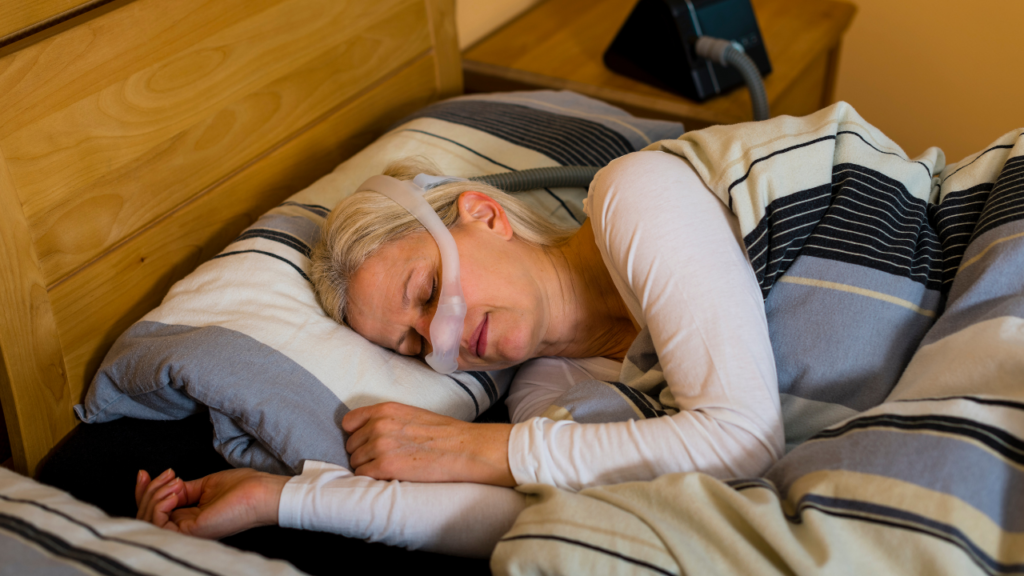
Is Snoring Always a Sign of Sleep Apnea?
No. Snoring is not always a sign of sleep apnea.
Snoring is common and can happen when the tissues in the throat, mouth, or nose relax and vibrate as air moves through a narrowed upper airway. Many people snore without having obstructive sleep apnea (OSA).
However, snoring can also be an important symptom of sleep apnea. The key difference is that sleep apnea involves repeated interruptions or reductions in breathing during sleep. These breathing disruptions can cause drops in oxygen levels and brief awakenings that fragment sleep.
So, snoring alone cannot tell you whether you have sleep apnea.
If snoring is loud and frequent, especially when it occurs with gasping, choking, witnessed pauses in breathing, or significant daytime sleepiness, it is worth discussing with a healthcare professional.
What Causes Snoring?
Snoring happens when airflow causes relaxed tissues in the upper airway to vibrate.
During sleep, muscles in the throat naturally relax. If the airway becomes narrower, airflow can make surrounding tissues vibrate, producing the familiar snoring sound.
Several factors can make snoring more likely, including:
- Sleeping on your back
- Nasal congestion
- Allergies or other conditions that interfere with nasal breathing
- Smoking
- Alcohol use
- Some medications or sedatives
- Excess body weight
- Structural differences in the nose or throat
- Enlarged tissues around the throat
- Certain medical conditions
Not everyone who snores has the same underlying cause. In some people, snoring may occur mainly because the airway becomes more crowded or relaxed during sleep.
What Is the Difference Between Snoring and Sleep Apnea?
The most important distinction is breathing.
With primary, or simple, snoring, the airway may become narrowed enough to produce vibration and noise, but the person does not necessarily experience repeated episodes of stopped or significantly reduced breathing.
With obstructive sleep apnea, the upper airway repeatedly becomes blocked or severely narrowed during sleep. Breathing can slow or stop temporarily, followed by partial arousals that help reopen the airway.
| Feature | Primary Snoring | Obstructive Sleep Apnea |
|---|---|---|
| Loud breathing sounds | Common | Common |
| Narrowed upper airway | May occur | Typically occurs |
| Repeated breathing interruptions | Not necessarily | Characteristic of OSA |
| Gasping or choking during sleep | Less typical | Can occur |
| Drops in oxygen | Not necessarily | May occur |
| Fragmented sleep | Not necessarily | Common |
| Daytime sleepiness | Not necessarily | May occur |
| Requires diagnostic testing to confirm | Usually not | Yes |
The table shows why the sound of snoring alone is not enough to diagnose sleep apnea.
Why Can Someone Snore Without Having Sleep Apnea?
Snoring and sleep apnea exist on a broader spectrum of sleep-related breathing problems.
A person can have airway narrowing that produces vibration and snoring without having the repeated breathing interruptions characteristic of OSA. A clinical review specifically notes that snoring itself does not involve cessation of breathing and that some people who snore have normal sleep-study results.
Research also shows that snoring can be associated with several factors besides sleep apnea. A 2024 study of 815 adults found associations between habitual snoring and factors including age, asthma, sleepiness, smoking, diabetes, and abdominal obesity. Because this was a cross-sectional study, however, these associations should not be interpreted as proof that any one of these factors directly causes snoring.
This distinction is important: a risk factor or association is not the same thing as a diagnosis.
Is Loud Snoring More Concerning?
Loud or frequent snoring deserves more attention when it occurs alongside other symptoms.
According to patient guidance from JAMA Otolaryngology–Head & Neck Surgery and the American Academy of Sleep Medicine–affiliated SleepApnea.org, warning signs can include:
- Pauses in breathing noticed by another person
- Gasping or choking during sleep
- Excessive daytime sleepiness
- Morning headaches
- Difficulty concentrating
- Persistent fatigue despite getting enough time in bed
- High blood pressure, particularly when other symptoms are present
One challenge is that many symptoms occur while you are asleep, so you may not know they are happening.
A partner, roommate, or family member may be the first person to notice pauses in breathing, choking, or unusual breathing patterns.
Can You Have Sleep Apnea Without Snoring?
Yes.
Although snoring is a common symptom of obstructive sleep apnea, it should not be treated as a requirement for the condition.
SleepApnea.org notes that some people who snore do not have OSA, while not everyone with OSA snores. This is one reason symptoms alone cannot reliably establish or rule out the condition.
This matters because someone who does not snore but has other symptoms—such as unexplained daytime sleepiness, witnessed breathing pauses, or nighttime breathing difficulties—should not automatically assume that sleep apnea is impossible.
What Are the Warning Signs That Snoring May Be Sleep Apnea?
Consider talking with a healthcare professional if your snoring is accompanied by any of the following:
1. Someone notices that you stop breathing
Breathing pauses during sleep are one of the more concerning signs.
A bed partner may notice that your snoring stops, followed by silence, gasping, choking, or a sudden resumption of breathing.
2. You wake up gasping or choking
Repeated nighttime episodes of gasping or choking can indicate disrupted breathing.
They should not automatically be attributed to ordinary snoring.
3. You are excessively sleepy during the day
Sleep apnea can repeatedly interrupt normal sleep, even when you do not fully awaken or remember the interruptions.
As a result, some people experience substantial daytime sleepiness or difficulty staying alert.
4. You wake with headaches
Morning headaches can occur in people with sleep apnea, although headaches have many possible causes.
A headache by itself does not establish a diagnosis.
5. You have difficulty concentrating
Poor-quality sleep can affect attention, alertness, and concentration. These symptoms can have many causes, but they are worth discussing when they occur together with loud snoring or other nighttime breathing symptoms.
6. You have persistent high blood pressure
Sleep apnea is associated with cardiovascular health problems, including hypertension. However, high blood pressure has many causes, so it should not be used by itself to diagnose sleep apnea.
How Is Sleep Apnea Diagnosed?
You cannot reliably diagnose sleep apnea from snoring alone.
A healthcare professional may recommend a sleep evaluation based on your symptoms, medical history, and risk factors.
Testing may include a home sleep apnea test or an overnight sleep study conducted in a sleep laboratory, depending on the individual situation. These tests collect information about breathing and other physiological signals during sleep.
A formal sleep study, known as polysomnography, has traditionally been considered the reference standard for evaluating obstructive sleep apnea. Sleep studies can help determine whether breathing disruptions are occurring and assess their severity.
Why isn’t a snoring app enough?
Researchers are studying whether acoustic analysis of snoring could eventually help identify sleep apnea more easily. However, these approaches are still being investigated and should not be treated as replacements for appropriate medical testing.
Evidence status: Snoring-based technologies are an area of ongoing research. Their potential is promising, but diagnostic decisions should rely on clinically appropriate testing rather than sound recordings alone.
What Can You Do About Snoring?
If testing shows that you do not have sleep apnea, the underlying cause of snoring can still be addressed.
Depending on the cause, measures that may help include:
- Sleeping on your side rather than your back
- Addressing nasal congestion
- Avoiding or reducing alcohol, particularly close to bedtime
- Stopping smoking
- Maintaining a healthy weight when appropriate
- Discussing persistent nasal or airway problems with a healthcare professional
- Considering an oral appliance when clinically appropriate
The right approach depends on why you are snoring.
For example, treatment aimed at nasal congestion may make sense for someone whose nose is frequently blocked, while another person may require evaluation for a structural or sleep-related breathing problem.
What If Snoring Is Actually Sleep Apnea?
The approach is different when obstructive sleep apnea is diagnosed.
Treatment can include therapies such as positive airway pressure (PAP), oral appliances, and—in selected cases—other interventions. The appropriate treatment depends on factors such as the severity and characteristics of the sleep apnea and the individual’s health needs.
The important point is that treatment should target the underlying breathing disorder rather than simply trying to make the snoring quieter.
Does Snoring Itself Cause Health Problems?
This area requires some caution.
Snoring is associated with a number of health conditions in observational research, but association does not necessarily mean that snoring itself directly causes those conditions.
For example, research has investigated relationships between snoring and cardiovascular or metabolic conditions. Some studies suggest that snoring may have health significance even when sleep apnea is not present, but the evidence is not sufficient to treat ordinary snoring as an independent cause of every condition with which it has been associated.
By contrast, obstructive sleep apnea is a well-established medical condition with clinically important consequences, which is why distinguishing it from primary snoring matters. Reviews and cardiovascular literature describe associations between OSA and conditions including hypertension and cardiovascular disease.
When Should You See a Doctor About Snoring?
Consider speaking with a healthcare professional if:
- You snore loudly or frequently.
- Your partner notices pauses in your breathing.
- You wake up choking or gasping.
- You are unusually sleepy during the day.
- You regularly wake with headaches.
- You have persistent problems with concentration or alertness.
- Your snoring has become significantly worse.
- You have other symptoms that suggest disrupted breathing during sleep.
You do not need to wait until someone observes a complete breathing pause before asking about persistent, bothersome snoring.
The goal is not to assume that you have sleep apnea. The goal is to determine whether there is an underlying sleep or breathing problem that needs attention.
Frequently Asked Questions
Does everyone who snores have sleep apnea?
No. Many people snore without having obstructive sleep apnea. Snoring is common in adults, while sleep apnea involves repeated disruptions in breathing during sleep.
Is loud snoring always sleep apnea?
No. Loud snoring can occur without sleep apnea. However, loud and frequent snoring becomes more concerning when it occurs with gasping, choking, witnessed breathing pauses, or significant daytime sleepiness.
Can you snore and have normal sleep apnea testing?
Yes. Some people who snore do not have OSA, and a sleep study can help distinguish primary snoring from sleep apnea.
Can you have sleep apnea without snoring?
Yes. Snoring is common in OSA, but its absence does not reliably rule out the condition.
Should I get tested for sleep apnea if I snore?
Not everyone who snores necessarily needs a sleep study. However, persistent snoring combined with symptoms such as witnessed breathing pauses, gasping, choking, or excessive daytime sleepiness warrants medical evaluation. A healthcare professional can determine whether testing is appropriate.
Can losing weight stop snoring?
Weight can be one factor associated with snoring and obstructive sleep apnea. For people whose snoring or OSA is related to excess weight, weight management may help. However, it is not a universal solution because snoring has multiple possible causes.
Is snoring harmless?
Sometimes, yes. Primary snoring may not represent sleep apnea. But persistent snoring should not automatically be dismissed, especially when it occurs with symptoms of disrupted breathing or poor-quality sleep.
The Bottom Line
Snoring does not automatically mean you have sleep apnea.
Snoring occurs when tissues in the upper airway vibrate as air passes through a narrowed airway. It can happen for many reasons and may occur in people who do not have a sleep disorder.
The concern increases when snoring is accompanied by breathing pauses, gasping or choking during sleep, excessive daytime sleepiness, morning headaches, or difficulty concentrating.
Most importantly, snoring alone cannot diagnose or rule out sleep apnea. When symptoms raise concern, appropriate sleep testing can determine whether repeated breathing disruptions are occurring.
If you or someone who sleeps near you has noticed persistent loud snoring or unusual breathing during sleep, consider discussing it with a qualified healthcare professional.
Medical Disclaimer
This article is for educational purposes only and is not a substitute for professional medical advice, diagnosis, or treatment. Persistent snoring, breathing pauses during sleep, choking or gasping at night, or significant daytime sleepiness should be discussed with a qualified healthcare professional.
Sources Used
- Bernstein P, Higa Ebba J. Snoring Versus Obstructive Sleep Apnea: A Case Report. The Permanente Journal.
- Kasmaoui FE, et al. Snoring and its Associated Comorbidities. Sleep Science. 2024.
- Agarwal T. Snoring and sleep apnoea. InnovAiT. 2020.
- Huyett P. What Is Snoring? JAMA Otolaryngology–Head & Neck Surgery. 2023.
- Goodchild T, Lefer DJ. Obstructive Sleep Apnea: The Not-So-Silent Killer. Circulation Research. 2020.
- SleepApnea.org. Does Snoring Mean Sleep Apnea? Updated 2026.
- Harvard Health Publishing. Is snoring always a sign of sleep apnea?