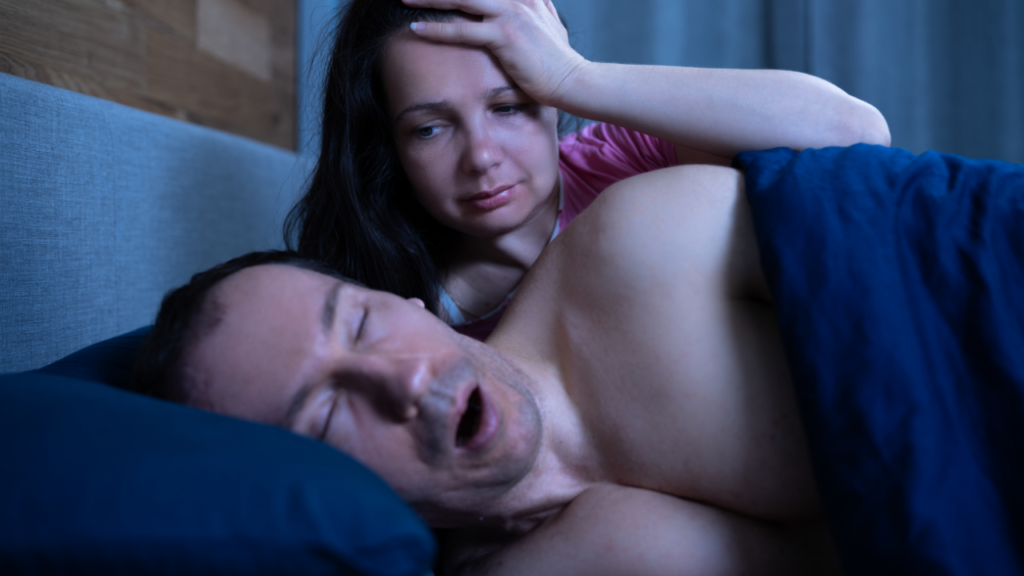
Common Signs of Sleep Apnea
Sleep apnea is a sleep disorder in which breathing repeatedly stops or becomes reduced during sleep. These interruptions can disturb normal sleep and may occur without the person realizing it.
Obstructive sleep apnea (OSA) is the most common form. It occurs when the upper airway becomes narrowed or blocked during sleep. Central sleep apnea (CSA) is different: it occurs when the brain temporarily fails to send the appropriate signals to the muscles involved in breathing.
Recognizing the signs can help you know when it may be time to talk with a healthcare professional.
1. Loud or Frequent Snoring
Loud, persistent snoring is one of the most recognizable signs associated with obstructive sleep apnea.
However, snoring does not automatically mean you have sleep apnea. Many people snore without having the disorder, and some people with sleep apnea do not snore.
Snoring becomes more concerning when it occurs together with other symptoms, such as:
- Breathing pauses during sleep
- Gasping or choking
- Excessive daytime sleepiness
- Morning headaches
- Difficulty concentrating
If a partner or family member regularly complains about unusually loud snoring, it may be worth discussing with a healthcare professional.
2. Pauses in Breathing During Sleep
Another important sign is when someone notices that you stop breathing temporarily while asleep.
People with sleep apnea may not know these episodes are happening because they are asleep when they occur. A bed partner may notice periods of silence followed by a gasp, snort, or choking sound.
These breathing interruptions are particularly important because they can repeatedly disturb sleep throughout the night.
If someone tells you that your breathing repeatedly stops while you sleep, do not simply dismiss it as ordinary snoring.
3. Gasping, Choking, or Snorting During Sleep
Some people with sleep apnea briefly awaken or partially awaken when their airway becomes blocked.
You may not remember these awakenings the next morning. Instead, a partner may notice sudden gasping, choking, snorting, or unusual movements during the night.
Repeated episodes can contribute to fragmented, less restorative sleep.
4. Excessive Daytime Sleepiness
Feeling extremely sleepy during the day is an important symptom of sleep apnea.
You may sleep for what seems like an adequate amount of time but still feel that you could fall asleep during quiet activities. Daytime sleepiness can interfere with work, studying, conversations, or other routine activities.
It can also become a safety concern if you become sleepy while driving.
The CDC notes that quality sleep should be both sufficient and refreshing. Feeling tired or sleepy despite getting enough sleep can be a sign of poor sleep quality.
5. Waking With a Dry Mouth
A dry mouth in the morning can occur in people with sleep apnea.
This may be related to breathing through the mouth during sleep, particularly when nasal breathing is difficult. Mayo Clinic lists waking with a dry mouth among the symptoms that can occur with sleep apnea.
A dry mouth by itself does not diagnose sleep apnea. It becomes more meaningful when it occurs alongside other symptoms such as loud snoring, gasping, or daytime sleepiness.
6. Morning Headaches
Some people with sleep apnea experience headaches after waking.
Morning headaches are listed among the recognized symptoms of sleep apnea, although headaches can have many other causes.
For this reason, a morning headache should not automatically be attributed to sleep apnea. A healthcare professional can help determine whether sleep apnea or another condition may be contributing.
7. Trouble Concentrating or Remembering
Poor-quality sleep can affect how you function during the day.
People with sleep apnea may experience problems with:
- Concentration
- Attention
- Memory
- Mental alertness
The American Lung Association lists memory and concentration difficulties among possible symptoms, while Mayo Clinic also identifies trouble paying attention while awake.
These symptoms can be subtle. Some people may simply describe the experience as feeling mentally “foggy” during the day.
8. Irritability or Mood Changes
Sleep apnea can affect more than physical energy.
Repeated sleep disruption may be accompanied by irritability, mood changes, or difficulty coping with everyday demands. Mayo Clinic and the American Lung Association both list irritability or unusual moodiness among possible symptoms.
Mood changes alone do not mean someone has sleep apnea. But persistent mood changes combined with poor-quality sleep and other symptoms deserve attention.
9. Frequently Waking During the Night
Sleep apnea can cause repeated interruptions to sleep.
Some people may wake frequently without understanding why. Others may have difficulty staying asleep or may experience symptoms such as gasping or choking that interrupt their sleep.
Frequent nighttime awakenings can also have many other causes, including insomnia, medications, stress, alcohol, pain, and other sleep disorders.
This is why a complete evaluation is important rather than assuming that every nighttime awakening is caused by sleep apnea.
10. Waking Up Feeling Unrefreshed
One of the most important clues is the difference between sleeping and feeling rested.
You may spend enough time in bed but still wake up feeling tired or poorly rested. Sleep apnea can repeatedly disrupt normal sleep, making it harder to obtain restorative sleep.
The CDC similarly identifies feeling tired or sleepy even after getting enough sleep as a sign of poor sleep quality.
If this happens regularly, it is worth considering whether a sleep disorder could be contributing.
11. Waking Up to Urinate Frequently
Repeated nighttime urination, known as nocturia, can occur in people with sleep apnea.
The American Lung Association lists frequent nighttime urination among possible symptoms.
However, nocturia has many possible causes. These include drinking fluids close to bedtime, certain medications, urinary conditions, diabetes, and other health problems.
Therefore, frequent nighttime urination should not be used by itself to identify sleep apnea.
12. Sexual Health Changes
Sleep apnea can also be associated with sexual health symptoms.
The American Lung Association lists erectile dysfunction and decreased libido among possible symptoms of obstructive sleep apnea.
However, these symptoms have many possible causes, including medications, hormonal changes, cardiovascular conditions, stress, relationship factors, and other medical conditions.
Further evaluation is appropriate if these symptoms are persistent or concerning.
Sleep Apnea Symptoms at Night vs. During the Day
| Nighttime signs | Daytime signs |
|---|---|
| Loud or frequent snoring | Excessive sleepiness |
| Pauses in breathing | Trouble concentrating |
| Gasping or choking | Memory difficulties |
| Snorting during sleep | Irritability |
| Frequent awakenings | Feeling unrefreshed |
| Dry mouth upon waking | Fatigue |
| Frequent nighttime urination | Reduced alertness |
Not everyone with sleep apnea will experience every symptom. Symptoms can also vary between individuals and between different types of sleep apnea.
Can You Have Sleep Apnea Without Snoring?
Yes.
Snoring is common in obstructive sleep apnea, but it is not required for the condition to be present. The American Lung Association specifically notes that not everyone who has sleep apnea snores.
This is important because someone who does not snore may incorrectly assume that sleep apnea is impossible.
Other warning signs—such as witnessed breathing pauses, gasping, excessive daytime sleepiness, morning headaches, or unrefreshing sleep—should also be considered.
Who May Be at Higher Risk?
Sleep apnea can affect people with different body types and backgrounds. Certain factors, however, can increase the likelihood of obstructive sleep apnea.
These include:
- Excess weight
- Older age
- A narrower upper airway
- A larger neck circumference
- Family history
- Nasal congestion
- Alcohol use
- Smoking
- Certain medications or sedatives
- Some medical conditions
Mayo Clinic and NCBI sources identify several of these factors as associated with increased risk.
Importantly, not having these risk factors does not rule out sleep apnea.
What Is the Difference Between Snoring and Sleep Apnea?
Snoring happens when airflow through the upper airway causes surrounding tissues to vibrate.
Sleep apnea involves repeated interruptions or reductions in breathing during sleep.
The two can occur together, but they are not the same condition.
| Snoring | Sleep apnea |
|---|---|
| Can occur without sleep apnea | Involves abnormal breathing during sleep |
| May be harmless in some people | Can be a significant medical condition |
| Does not necessarily cause breathing pauses | May involve repeated breathing pauses or reductions |
| Does not diagnose sleep apnea | Requires appropriate clinical evaluation and testing |
The key point is simple: loud snoring alone does not establish a diagnosis of sleep apnea.
When Should You Talk to a Healthcare Professional?
Consider speaking with a healthcare professional if you regularly experience symptoms such as:
- Loud, disruptive snoring
- Someone observing that you stop breathing during sleep
- Gasping or choking at night
- Significant daytime sleepiness
- Persistent unrefreshing sleep
- Difficulty staying awake during the day
- Problems with concentration or memory
- Repeated morning headaches
The American Lung Association recommends discussing sleep apnea with a healthcare provider when there are breathing pauses during sleep, disruptive snoring, or difficulty staying awake during the day.
Do not drive if you are excessively sleepy or struggling to stay awake. Daytime sleepiness associated with sleep apnea can increase safety risks, including while driving.
How Is Sleep Apnea Diagnosed?
Symptoms can raise suspicion, but symptoms alone cannot confirm sleep apnea.
A healthcare professional may review your medical history, sleep habits, medications, symptoms, and physical findings. A sleep study may then be recommended.
Testing may include:
Polysomnography
An overnight sleep study performed in a sleep center can monitor several body functions during sleep, including breathing, oxygen levels, heart activity, and other measures.
Home Sleep Apnea Testing
For appropriately selected adults, a home sleep apnea test may be an option. It can monitor breathing-related measurements while you sleep at home.
However, home testing is not appropriate for everyone. NCBI notes that some patients with significant medical conditions or a more complicated clinical picture may require an in-laboratory sleep study.
A healthcare professional should determine which type of testing is appropriate.
Can a Sleep Apnea Screening Tool Diagnose You?
Screening questionnaires can help identify people who may be at higher risk.
For example, the STOP-BANG questionnaire considers factors such as:
- Snoring
- Tiredness
- Observed breathing pauses
- Blood pressure
- Body mass index
- Age
- Neck circumference
- Sex
NCBI describes STOP-BANG as a widely used screening tool for estimating the likelihood of moderate-to-severe obstructive sleep apnea.
However, a screening questionnaire is not the same as a diagnosis. If your screening result suggests increased risk, a healthcare professional can determine whether further testing is appropriate.
What If You Have Only One or Two Symptoms?
Having one symptom does not necessarily mean you have sleep apnea.
For example, snoring can occur without sleep apnea. Fatigue can result from insufficient sleep, stress, medications, insomnia, or many other health conditions.
The concern becomes greater when several compatible symptoms occur together, particularly when there are witnessed breathing pauses, gasping during sleep, or significant daytime sleepiness.
This is why diagnosis should be based on an overall clinical assessment rather than one symptom alone.
Frequently Asked Questions
What is the most common sign of sleep apnea?
Loud snoring is one of the most recognizable symptoms, particularly with obstructive sleep apnea. However, not everyone with sleep apnea snores.
Can sleep apnea cause daytime tiredness?
Yes. Excessive daytime sleepiness and fatigue are common symptoms associated with obstructive sleep apnea.
Can you have sleep apnea without knowing it?
Yes. Breathing interruptions occur during sleep, so the person experiencing them may not be aware of them. A bed partner may notice pauses, gasping, choking, or loud snoring.
Is snoring always a sign of sleep apnea?
No. Many people snore without having sleep apnea, and some people with sleep apnea do not snore.
Can sleep apnea cause morning headaches?
Morning headaches can occur with sleep apnea, but headaches have many possible causes. Persistent headaches should be discussed with a healthcare professional.
How do I know if I should get tested?
Consider discussing testing with a healthcare professional if you have repeated breathing pauses during sleep, loud disruptive snoring, gasping or choking at night, significant daytime sleepiness, or persistent unrefreshing sleep.
Can a smartwatch or phone diagnose sleep apnea?
Consumer sleep and wearable devices may provide information about sleep patterns or breathing-related signals, but they should not be treated as a substitute for an appropriate medical evaluation or diagnostic sleep study.
Evidence note: The usefulness and accuracy of individual consumer devices vary. Specific claims about a particular device should be verified against current clinical evidence before being presented as a diagnostic capability.
The Bottom Line
Sleep apnea is more than ordinary snoring.
Common signs include loud snoring, witnessed pauses in breathing, gasping or choking during sleep, excessive daytime sleepiness, morning headaches, dry mouth, nighttime awakenings, concentration problems, and waking without feeling refreshed.
Not everyone experiences the same symptoms, and some people may have sleep apnea without obvious snoring.
If several of these signs are occurring regularly—especially if someone observes that your breathing stops during sleep—it is worth discussing them with a healthcare professional. A proper evaluation can determine whether a sleep study or other testing is appropriate.
Good sleep is an important part of overall health. The CDC emphasizes that healthy sleep involves both getting enough sleep and getting sleep that is refreshing and uninterrupted.
Source:
- Mayo Clinic — Sleep Apnea: Symptoms and Causes
- NCBI Bookshelf — Obstructive Sleep Apnea
- American Lung Association — Sleep Apnea Symptoms and Diagnosis
- CDC — About Sleep
- Mayo Clinic — Obstructive Sleep Apnea: Symptoms and Cause