Raw Garlic Benefits: An Evidence-Based Guide
Garlic has been used as both a food and traditional remedy for centuries. Today, researchers are studying whether eating garlic—particularly raw white garlic—may support cardiovascular and metabolic health.
Raw garlic is different from garlic supplements, aged black garlic, garlic extracts, and cooked garlic. These products can contain different amounts and types of sulfur compounds, so findings from one form of garlic should not automatically be applied to another.
A 2024 mini-review specifically examined human research on raw white garlic. The researchers identified 12 clinical trials and 10 observational studies. The results were promising in several areas, but the authors emphasized that the evidence is still limited by small clinical trials, different doses and preparations, short study periods, and limited geographic diversity in observational research.
So, what are the potential benefits of raw garlic—and what does the evidence actually show?
What Makes Raw Garlic Different?
One of the most important compounds associated with fresh garlic is allicin.
Whole garlic contains sulfur-containing compounds, including alliin. When a garlic clove is crushed or chopped, an enzyme called alliinase helps convert alliin into allicin and other sulfur-containing compounds.
Allicin is unstable and quickly breaks down into additional sulfur compounds. This chemistry is one reason fresh garlic may behave differently from aged garlic, garlic powder, extracts, or other processed forms.
Why preparation matters
| Garlic form | Why it matters |
|---|---|
| Raw, crushed garlic | Produces allicin through the action of alliinase |
| Cooked garlic | Heat can alter garlic’s sulfur compounds |
| Aged black garlic | Has a different chemical composition from fresh garlic |
| Garlic extract | Concentration and compounds depend on the extraction process |
| Garlic supplements | Products vary considerably in formulation and dose |
This distinction is important when reading health claims about garlic. Research on a garlic supplement does not necessarily prove that eating a raw garlic clove will produce the same effect.
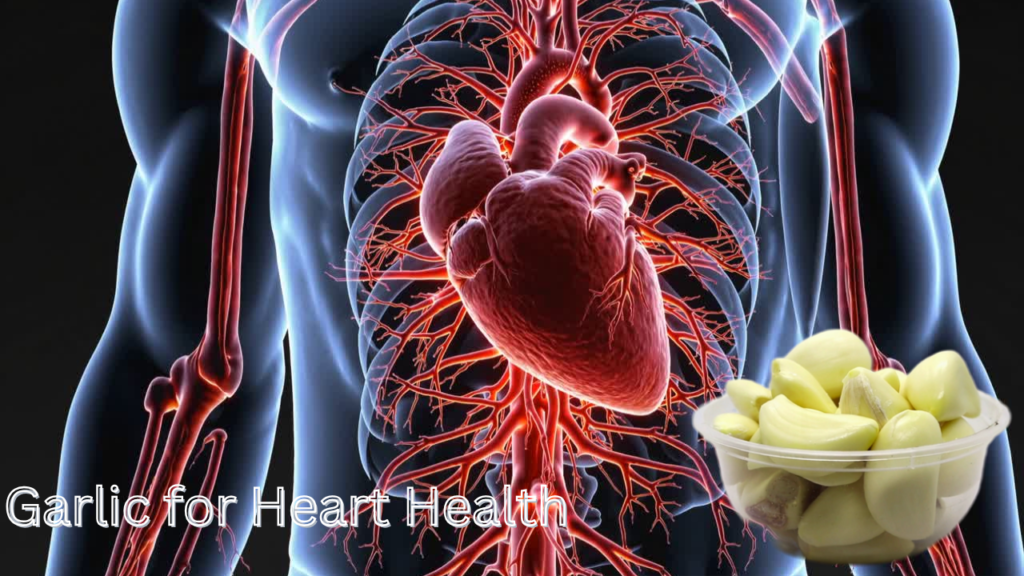
1. Raw Garlic May Support Heart and Blood Vessel Health
Cardiovascular health is one of the areas where garlic has received considerable research attention.
In the 2024 review, several clinical trials involving raw garlic reported improvements in cardiovascular-related measures, including blood lipid levels and blood pressure. However, not every trial found a benefit.
For example, some trials reported reductions in total cholesterol, triglycerides, or LDL cholesterol, while another six-month trial found no significant changes in several lipid measures. The researchers therefore concluded that more standardized and larger trials are needed.
What about blood pressure?
Some clinical research involving raw garlic found reductions in systolic and diastolic blood pressure.
However, the evidence should not be interpreted as proof that raw garlic can treat hypertension. The studies differed substantially in dose, duration, participant characteristics, and design.
The National Center for Complementary and Integrative Health (NCCIH) also notes that research on garlic supplements suggests small reductions in blood pressure among people with high blood pressure. Importantly, that evidence concerns garlic supplements and should not automatically be applied to raw garlic.
Evidence level: Promising but limited for raw garlic.
2. Raw Garlic May Help Support Healthy Cholesterol Levels
Another potential raw garlic benefit is its effect on blood lipids.
Several of the clinical trials reviewed in 2024 reported reductions in total cholesterol and triglycerides. Some also reported reductions in LDL cholesterol or increases in HDL cholesterol.
Researchers have proposed several possible mechanisms. Garlic’s sulfur compounds may influence pathways involved in cholesterol production and the handling of oxidized LDL particles. These mechanisms are biologically plausible, but they do not by themselves prove that eating raw garlic prevents cardiovascular disease.
The NCCIH reports that garlic supplements may produce a small reduction in total and LDL cholesterol in people with high cholesterol. Again, this is evidence about supplements rather than specifically raw garlic.
Evidence level: Some supportive evidence, but raw-garlic-specific research remains limited.
3. Raw Garlic May Influence Blood Sugar
Blood glucose is another area being investigated.
Some clinical trials in the raw-garlic review reported reductions in fasting blood glucose. One trial involving people with type 2 diabetes reported improvements in blood glucose and several lipid measures.
Observational research has also found associations between raw garlic consumption and measures of insulin regulation. One prospective study included raw garlic and raw onion together, however, making it difficult to determine how much of the observed association was attributable specifically to garlic.
The NCCIH states that garlic supplements may lower blood sugar by a small amount in people with diabetes.
This does not mean raw garlic should replace diabetes medication, dietary treatment, physical activity, or medical care.
Evidence level: Preliminary to moderate, depending on the garlic preparation studied.
4. Raw Garlic Contains Compounds With Antioxidant Activity
Garlic contains several sulfur-containing compounds that may interact with oxidative processes in the body.
Some human studies included in the raw-garlic review found increases in antioxidant-related enzymes such as:
- Superoxide dismutase (SOD)
- Catalase (CAT)
- Glutathione peroxidase (GPx)
These enzymes are part of the body’s antioxidant defense system.
However, antioxidant activity observed in laboratory experiments or changes in biomarkers should not automatically be translated into prevention or treatment of a particular disease.
Evidence level: Biologically plausible, with some human evidence, but clinical significance remains uncertain.
5. Raw Garlic May Have Effects on Blood Clotting
Garlic’s sulfur compounds have been studied for possible effects on platelet activity and blood clotting pathways.
Some research suggests garlic compounds may influence platelet aggregation and fibrinolytic activity. In the raw-garlic review, several older clinical studies reported increased fibrinolytic activity.
At the same time, one small study found that consuming 4.2 grams of raw garlic did not impair platelet function under the conditions tested.
This area is particularly important for people taking medications that affect bleeding.
Garlic supplements may increase bleeding risk, and NCCIH advises people taking anticoagulants or aspirin to discuss garlic use with their healthcare provider.
Evidence level: Biologically active, but the clinical implications depend on dose, preparation, medications, and individual circumstances.
6. Raw Garlic and Cancer: Promising Associations, Not Proof
Cancer is one of the most commonly discussed topics surrounding garlic.
Observational studies reviewed in 2024 found associations between raw garlic consumption and lower odds of several cancers, including liver, lung, and esophageal cancer. However, these were primarily observational or case-control studies, and most were conducted in China.
This distinction matters.
An association does not establish cause and effect. People who eat more garlic may differ from people who eat less garlic in many other ways, including overall diet, lifestyle, healthcare access, or other health behaviors.
NCCIH states that consuming garlic does not appear to reduce the risk of stomach cancer, while the evidence regarding colorectal cancer remains uncertain.
Therefore, it would be inaccurate to say that raw garlic prevents or treats cancer.
Evidence level: Interesting observational evidence, but insufficient to establish a cancer-prevention effect.
7. Raw Garlic May Be Associated With Metabolic Health
Some observational research has linked raw garlic consumption with measures related to metabolic health.
The 2024 review reported associations involving:
- Insulin resistance
- Hyperinsulinemia
- Prehypertension
- Newly diagnosed nonalcoholic fatty liver disease
- Carotid artery thickness
These findings are interesting, but observational research cannot establish that garlic caused the differences.
Clinical trials are needed to determine whether adding raw garlic to a person’s diet actually produces meaningful improvements in these conditions.
Evidence level: Preliminary.
8. Raw Garlic May Support a Healthy Diet
There is also a simpler benefit that receives less attention: garlic can make healthy foods more flavorful.
Fresh garlic can add strong flavor to:
- Vegetables
- Beans and lentils
- Whole grains
- Fish
- Soups
- Salads
- Homemade sauces
- Lean proteins
Using garlic to add flavor may help people prepare nutritious meals without relying as heavily on excessive salt or highly processed sauces.
This is a practical nutrition benefit even when the more specific health effects of raw garlic remain under investigation.
Raw Garlic Benefits at a Glance
| Potential benefit | What the evidence suggests | Evidence status |
|---|---|---|
| Cholesterol | Some studies report improvements in lipid measures | Promising, but mixed |
| Blood pressure | Some raw-garlic trials report reductions | Limited |
| Blood sugar | Some trials report lower fasting glucose | Preliminary to promising |
| Antioxidant activity | Some studies report changes in antioxidant enzymes | Promising |
| Blood clotting | Garlic compounds can affect platelet-related pathways | Active research; safety matters |
| Cancer risk | Observational studies show associations with lower risk for some cancers | Not proof of prevention |
| Metabolic health | Associations reported with insulin regulation and other markers | Preliminary |
| Immune function | Evidence for garlic supplements is limited | Insufficient for strong claims |
How to Eat Raw Garlic
If you enjoy raw garlic, there are several simple ways to include it in meals.
Try raw garlic in:
- Homemade salad dressings
- Hummus
- Guacamole
- Salsa
- Bean salads
- Vegetable dips
- Yogurt-based sauces
- Homemade marinades
Raw garlic has a much stronger flavor than cooked garlic, so starting with a small amount may make it easier to tolerate.
Should you crush garlic before eating it?
Crushing or chopping garlic activates the enzyme that helps convert alliin into allicin.
The resulting sulfur compounds are unstable, so preparation and timing can affect the chemical profile of the garlic.
However, there is not enough evidence to recommend a specific preparation method or exact amount of raw garlic for achieving a particular health outcome.
How Much Raw Garlic Should You Eat?
There is no well-established daily dose of raw garlic that has been proven to provide a specific health benefit.
The clinical studies reviewed in 2024 used widely different amounts—from relatively small quantities to much larger doses—and varied greatly in duration. Some studies used single doses, while others continued for weeks or months.
This makes it inappropriate to take a research dose and assume that it is a recommended daily amount for everyone.
More garlic is not necessarily better.
For general nutrition, garlic can be treated as a flavorful food rather than as a high-dose treatment.
Raw Garlic Side Effects
Raw garlic is generally considered safe as a food for most people, but it can cause unpleasant effects.
Possible side effects include:
- Bad breath
- Body odor
- Abdominal discomfort
- Gas
- Nausea
- Digestive irritation
- Allergic reactions in some people
These effects may be more noticeable when larger amounts are consumed.
Raw garlic can also be particularly irritating to the digestive system for some people.
Can Raw Garlic Burn Your Skin?
Yes.
This is an important safety point that is sometimes missed in online discussions about natural remedies.
Do not apply raw garlic directly to your skin as a home treatment.
NCCIH warns that fresh raw garlic applied to the skin can cause severe irritation and chemical burns.
Eating garlic and applying concentrated raw garlic to the skin are very different practices.
Who Should Be Careful With Garlic?
Talk with a healthcare professional before using large amounts of garlic or garlic supplements if you:
- Take anticoagulant or blood-thinning medication.
- Take aspirin or other medicines that can affect bleeding.
- Are preparing for surgery.
- Take medications regularly and are considering concentrated garlic supplements.
- Are pregnant or breastfeeding and considering amounts greater than those normally found in food.
NCCIH specifically advises people taking anticoagulants, aspirin, or other medicines to discuss garlic use with their healthcare provider because herb-drug interactions can sometimes be harmful.
Raw Garlic vs. Garlic Supplements
It is tempting to assume that a garlic capsule provides the same benefits as a raw garlic clove.
That assumption is not necessarily correct.
Different garlic products can have different chemical compositions. Processing, aging, drying, extraction, and formulation can change the compounds present in the final product.
Therefore:
Evidence for garlic supplements should not automatically be presented as evidence for raw garlic.
This distinction is especially important when discussing cholesterol, blood pressure, blood sugar, or disease prevention.
What the Research Still Does Not Tell Us
The research on raw garlic is promising, but several questions remain unanswered.
Researchers still need better evidence about:
- The ideal amount of raw garlic to consume.
- Whether benefits differ between garlic varieties.
- How preparation affects health outcomes.
- How long garlic must be consumed before benefits appear.
- Whether raw garlic provides meaningful benefits beyond an overall healthy diet.
- Which people are most likely to benefit.
- Whether long-term raw garlic consumption reduces actual cardiovascular events or disease incidence.
- How raw garlic compares directly with garlic supplements and other garlic preparations.
The 2024 review specifically emphasized the need for larger randomized controlled trials and longer follow-up.
Frequently Asked Questions
Is eating raw garlic every day healthy?
Raw garlic can be part of a healthy diet for many people. However, there is not enough evidence to say that everyone should eat raw garlic every day or that a particular daily amount provides specific medical benefits.
Does raw garlic lower cholesterol?
Some clinical trials have reported improvements in cholesterol and triglycerides after raw garlic consumption. However, results are not consistent, and larger studies are needed.
Can raw garlic lower blood pressure?
Some studies of raw garlic have reported lower blood pressure. However, the evidence is limited, and raw garlic should not be considered a replacement for prescribed blood-pressure treatment.
Does raw garlic lower blood sugar?
Some clinical studies have reported lower fasting blood glucose after raw garlic consumption. The evidence is not strong enough to use raw garlic as a treatment for diabetes.
Does raw garlic boost the immune system?
Garlic supplements are often marketed for immune support, but NCCIH notes that relatively little research has examined this question, with limited evidence from small studies. Strong claims about raw garlic “boosting” immunity are therefore not justified.
Is raw garlic better than cooked garlic?
Not necessarily.
Raw and cooked garlic have different chemical profiles. Crushing fresh garlic produces allicin, while heat and processing can alter garlic’s sulfur compounds. That does not mean raw garlic is universally healthier than cooked garlic.
Can raw garlic prevent cancer?
There is not enough evidence to make that claim. Some observational studies have found associations between raw garlic consumption and lower odds of certain cancers, but these studies cannot prove that garlic caused the lower risk.
Can I put raw garlic on my skin?
No. Fresh raw garlic can cause severe skin irritation and chemical burns.
The Bottom Line
Raw garlic is a flavorful food containing biologically active sulfur compounds, including compounds produced when garlic is crushed.
Human research suggests that raw garlic may have beneficial effects on some cardiovascular and metabolic markers, including cholesterol, blood pressure, blood glucose, and antioxidant-related measures. However, the evidence specifically for raw garlic remains limited and inconsistent.
Some observational studies have also found associations between raw garlic consumption and lower risk of certain health conditions. These findings are interesting but should not be confused with proof that garlic prevents or treats disease.
For most people, the practical approach is simple: enjoy garlic as part of a varied, nutrient-rich diet rather than treating it as a cure-all.
If you take medications—particularly blood thinners—or are considering concentrated garlic supplements, speak with your healthcare professional first.
A note from SUNDRG HEALTH
Nutrition can support health, but no single food replaces appropriate medical care. The evidence on raw garlic is developing, and some potential benefits remain preliminary. Use garlic as one component of an overall healthy eating pattern, not as a substitute for diagnosis or treatment.
Sources:
- Frontiers in Nutrition — Exploring the health benefits of raw white garlic consumption in humans: a mini review (2024).
- National Center for Complementary and Integrative Health (NCCIH) — Garlic: Usefulness and Safety.
- ResearchGate — Raw white garlic mini-review.