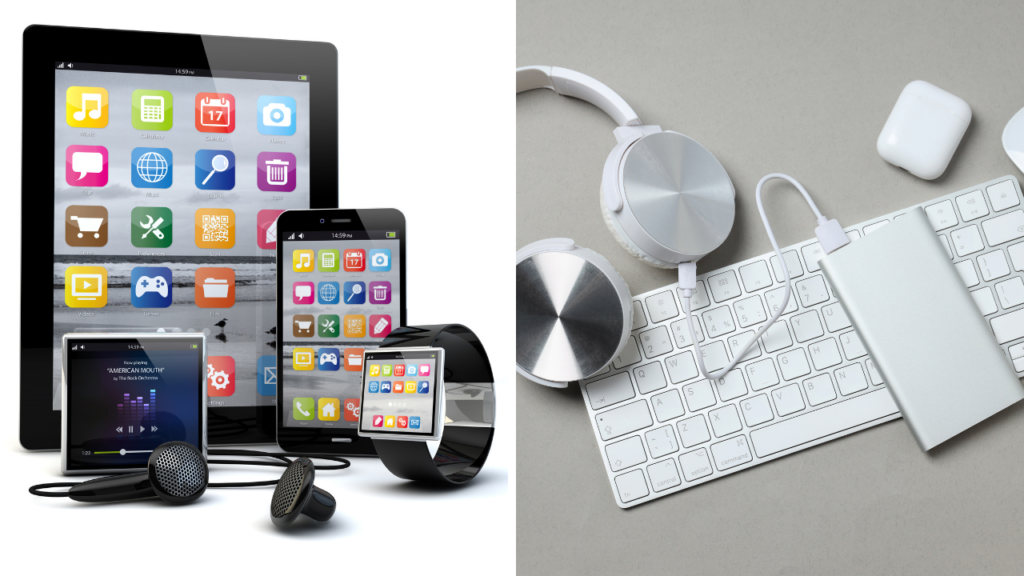
Budget vs. Premium Gadgets: An Introduction
Walking into an electronics store or browsing an online marketplace can make one thing clear: gadgets are available at almost every price level.
You can find affordable smartphones, headphones, smartwatches, laptops, televisions, cameras, and smart-home devices alongside much more expensive versions of the same product category.
The obvious question is: Does paying more actually get you a better gadget?
The answer is not always yes.
Premium gadgets often provide advantages in areas such as materials, performance, displays, cameras, software support, design, and ecosystem integration. At the same time, budget products can provide the essential functions many people actually need.
Research on consumer purchasing also suggests that value is not determined by price alone. Perceived value depends partly on a product’s features, usefulness, affordability, and how well it matches an individual’s needs.
That makes the budget-versus-premium decision less about buying the most expensive product and more about buying the right level of technology for the job.
What Is a Budget Gadget?
A budget gadget is generally designed to provide useful functionality at a lower purchase price.
Budget does not automatically mean poor quality.
Affordable devices may use less expensive materials, less powerful processors, simpler cameras, or fewer advanced features. However, these compromises can be perfectly reasonable when the gadget is intended for basic or moderate use.
For example, someone who primarily uses a smartphone for:
- Phone calls
- Text messaging
- Web browsing
- Social media
- Video streaming
- Basic photography
may not need the highest-end processor, professional-grade camera system, or most advanced display.
The important question is whether the device performs the tasks that matter to the buyer.
What Is a Premium Gadget?
Premium gadgets occupy the higher end of a product category.
They typically emphasize some combination of:
- Higher-end materials
- Faster hardware
- More advanced displays
- Better cameras or sensors
- Additional features
- Refined ergonomics
- Longer software support
- Stronger ecosystem integration
- More sophisticated engineering
- Additional customer support or warranty benefits
However, “premium” should not be interpreted as a guarantee that every aspect of a product is better.
A premium product may excel in areas that one person considers important but offer little practical benefit to another.
For example, a professional photographer may value camera sensors and image processing much more than someone who takes occasional family photographs.
Budget vs. Premium Gadgets: Key Differences
| Feature | Budget Gadgets | Premium Gadgets |
|---|---|---|
| Price | Lower upfront cost | Higher upfront cost |
| Performance | Usually sufficient for everyday tasks | Better suited to demanding workloads |
| Materials | Often uses cost-efficient materials | Often uses higher-grade materials |
| Display | Usually focuses on basic viewing quality | May offer higher brightness, resolution, refresh rates, or OLED technology |
| Camera | Suitable for everyday photography | More advanced sensors, lenses, and image processing may be available |
| Software support | May be more limited depending on manufacturer | Often stronger, but varies by brand and product |
| Design | Functional | Often more refined |
| Ecosystem | Basic connectivity | May offer deeper integration with other devices |
| Advanced features | Fewer | More extensive |
| Best for | Casual and moderate users | Power users and people prioritizing specific premium features |
These are general patterns rather than universal rules. Product quality varies considerably within both price categories.
What Are You Really Paying for With a Premium Gadget?
The price difference between two gadgets is rarely explained by one feature.
Instead, several improvements may be combined into a single product.
1. Performance
Premium devices frequently use more powerful processors, graphics hardware, memory, and storage.
This can matter when performing demanding tasks such as:
- Video editing
- 3D gaming
- Large-scale multitasking
- Professional creative work
- Processing high-resolution media
For lighter activities such as browsing, email, streaming, and messaging, the performance difference may be much less important.
Consumer-electronics comparisons similarly find that the advantages of higher-priced hardware become more noticeable during demanding workloads than during basic everyday activities.
Practical lesson
Buy performance based on your workload, not the specification sheet alone.
2. Build Quality
Build quality refers to more than how attractive a gadget looks.
It can include:
- Materials
- Structural design
- Component integration
- Manufacturing precision
- Resistance to everyday wear
- Protection against environmental conditions
Premium products often use materials such as metal alloys, reinforced glass, or other higher-grade materials. Budget products may rely more heavily on plastics and other cost-efficient materials.
But materials alone do not determine durability.
A well-designed product using an affordable material can still provide satisfactory service.
3. Display Quality
The display is one area where premium technology can be noticeable.
Higher-priced products may offer:
- OLED or AMOLED panels
- Higher refresh rates
- Higher brightness
- Better contrast
- Wider color ranges
- Improved HDR support
- Higher resolution
These differences can matter to gamers, photographers, video editors, and people who spend many hours consuming visual content.
For someone who mainly checks email or reads websites, however, a good-quality budget display may be sufficient.
4. Camera Performance
Camera systems are another area where premium devices can justify their price.
Higher-end smartphones and cameras may combine:
- Larger image sensors
- Multiple lenses
- Optical zoom
- Better stabilization
- More sophisticated image processing
- Improved low-light performance
This does not mean every expensive camera produces better photographs in every situation.
Photography skill, lighting, software processing, and the intended use all matter.
5. Software Updates and Security
Software support deserves particular attention when comparing gadgets.
A device is not just the hardware you purchase. Its software determines how you interact with that hardware and can affect security, compatibility, and access to new features.
Premium devices often receive stronger software support, but this is manufacturer- and model-specific. Buyers should check the actual update policy rather than assume that a higher price automatically means longer support. Consumer-electronics comparisons identify software support as one of the areas where premium products can have an advantage.
Before buying, check:
- How long security updates are promised
- How long major operating-system updates are supported
- How frequently updates are released
- Whether the manufacturer has a history of supporting devices
This may be more important for a smartphone or connected device that you intend to keep for several years.
When Budget Gadgets Make More Sense
There are many situations in which buying a budget gadget is the more rational decision.
Casual Use
If you mainly need a device for simple tasks, premium performance may go unused.
A budget laptop, smartphone, tablet, or television can be appropriate for everyday activities such as:
- Web browsing
- Streaming
- Video calls
- Messaging
- Basic office work
- Casual gaming
The goal should be to find a product that performs these tasks reliably rather than paying for capabilities you will rarely use.
Secondary Devices
A less expensive gadget can also make sense when it is not your primary device.
Examples include:
- Backup smartphones
- Travel tablets
- Secondary computers
- Guest-room televisions
- Basic smart-home accessories
If a device receives limited use, spending substantially more on premium features may provide little additional value.
Short-Term Needs
Sometimes you simply need technology to solve a temporary problem.
If you expect to use a gadget for a relatively short period, the economics may favor a less expensive product.
However, this depends on reliability, resale value, support, and the actual price difference.
When Paying More for Premium Makes Sense
Premium technology becomes easier to justify when its advantages directly affect your daily activities.
1. You Are a Power User
Gamers, video editors, photographers, designers, engineers, and other demanding users may benefit from higher-performance hardware.
In these situations, a faster processor, better graphics performance, more memory, better cooling, or a superior display can have a practical effect on productivity.
2. You Use the Gadget Every Day
The more frequently you use a gadget, the more important small improvements can become.
A difference in:
- Keyboard quality
- Screen quality
- Weight
- Battery behavior
- Speakers
- Buttons
- Trackpad
- Camera performance
- Comfort
may seem minor during a five-minute demonstration but become much more noticeable after months of daily use.
3. You Plan to Keep It for Several Years
Longevity changes the calculation.
A more expensive device can make sense if its useful life, software support, performance, or durability is sufficiently better to offset the higher initial price.
This is why buyers should consider total cost of ownership, not just the purchase price.
A $300 device that needs replacement quickly is not necessarily cheaper in the long run than a $600 device that remains useful for substantially longer.
However, this should be evaluated using actual product-specific evidence rather than assuming that premium devices always last longer.
How Gadgets Have Changed Everyday Life
The budget-versus-premium debate is easier to understand when we consider how much consumer technology has become part of ordinary life.
Gadgets have moved beyond being specialized electronic tools.
They now support communication, entertainment, work, navigation, home management, and many other everyday activities.
Communication
Smartphones, tablets, computers, and wearables allow people to communicate across distances through:
- Voice calls
- Video calls
- Messaging
- Social platforms
A single smartphone can replace several older categories of equipment.
Work and Productivity
Portable computers and connected devices have changed where and how many people work.
Laptops and tablets can support:
- Document creation
- Online meetings
- Research
- Collaboration
- Communication
- Project management
Smartphones also allow people to stay connected to work and personal services while away from a traditional computer.
The broader consumer-technology literature describes gadgets as increasingly connected to everyday activities, while IoT research specifically examines how connected devices influence consumer decisions and perceived value.
Entertainment
Modern gadgets have consolidated many entertainment functions.
A smartphone or tablet can provide access to:
- Music
- Movies
- Podcasts
- Games
- Books
- Social media
- Online video
Televisions, headphones, speakers, streaming devices, and gaming systems further expand this ecosystem.
Home Management
Smart-home gadgets have added another layer of convenience.
Connected:
- Lights
- Thermostats
- Cameras
- Doorbells
- Locks
- Speakers
- Sensors
can allow users to monitor or control aspects of their homes remotely.
The value of these devices depends not only on their features but also on affordability, usefulness, compatibility, privacy, and security.
Research on IoT purchase intentions has specifically examined the relationship between perceived value and affordability, reinforcing the importance of matching connected-device costs with consumer needs.
The Evolution of Consumer Electronics
Consumer electronics have changed dramatically over the decades.
Earlier generations of electronics were often designed around individual functions.
Today, devices increasingly combine multiple functions and communicate with other products.
From Single-Purpose Devices to Multifunction Gadgets
A modern smartphone can serve as a:
- Telephone
- Camera
- GPS navigator
- Music player
- Video player
- Calculator
- Calendar
- Alarm clock
- Digital wallet
- Communication platform
This consolidation is one of the most significant changes in consumer electronics.
From Offline to Connected
Older electronics often operated independently.
Modern devices increasingly connect through:
- Wi-Fi
- Bluetooth
- Cellular networks
- Cloud services
- Smart-home platforms
This connectivity creates new possibilities but also introduces considerations such as cybersecurity, privacy, account management, and software support.
From Hardware to Hardware + Software
A gadget’s capabilities are no longer determined solely by its physical components.
Software can change how a device works after purchase.
Updates can:
- Fix security problems
- Improve compatibility
- Add features
- Correct bugs
- Change the user interface
Consequently, evaluating consumer electronics increasingly requires looking at both hardware specifications and the manufacturer’s software-support practices.
Budget vs. Premium: Which Is Better?
There is no universal winner.
The better choice depends on what you need the gadget to do.
A budget gadget may be the better choice when:
- Your tasks are simple.
- Your budget is limited.
- The product is a secondary device.
- You do not need advanced features.
- You plan to upgrade relatively frequently.
A premium gadget may be the better choice when:
- You perform demanding tasks.
- You need specific advanced features.
- You use the device heavily.
- Build quality and ergonomics matter.
- You want deeper ecosystem integration.
- Long-term software support is important.
Research on perceived value also supports a needs-based approach: consumers evaluate the usefulness and value of IoT gadgets in relation to affordability and individual requirements rather than price alone.
A Simple Budget vs. Premium Decision Framework
Before buying, ask these seven questions:
1. What will I use this gadget for?
Write down the three most important tasks.
2. How often will I use it?
Daily use can make quality and comfort more important.
3. Which features actually matter?
Separate essential features from features that simply sound impressive.
4. Do I need high performance?
If you edit video or play demanding games, the answer may be yes.
For email and web browsing, it may be no.
5. How long do I expect to keep it?
Long-term ownership makes durability and software support more important.
6. Does it work with my existing devices?
Compatibility can affect convenience and functionality.
7. What is the total cost?
Consider:
- Purchase price
- Accessories
- Repairs
- Subscriptions
- Replacement costs
- Warranty
- Expected useful life
The Best Value Is Not Always the Cheapest
One of the most common mistakes in gadget shopping is confusing low price with good value.
A cheap gadget can become expensive if it fails to meet your needs and must be replaced.
The opposite mistake is assuming that the most expensive product automatically represents the best value.
A premium device may contain features that you never use.
The goal is to find the point where price, performance, reliability, features, and your actual needs intersect.
That is why perceived value is inherently personal. Research into consumer purchasing of IoT gadgets describes perceived value in terms of features, utility, and alignment with individual needs, alongside affordability.
Questions Readers Often Ask
Are premium gadgets always better than budget gadgets?
No.
Premium products often provide advantages in specific areas, but those advantages may not matter to every buyer. A well-chosen budget gadget can provide excellent value for everyday tasks.
Are budget gadgets worth buying?
Yes, when they meet your requirements.
The important distinction is between buying an inexpensive product that meets your needs and buying the cheapest product available without considering quality, compatibility, support, or reliability.
When should I buy a premium gadget?
Consider premium technology when you need advanced performance, specialized features, higher-quality displays or cameras, refined ergonomics, or stronger long-term support.
Is build quality important?
It can be, particularly for gadgets that are carried frequently or used heavily.
But build quality involves more than premium materials. Design, assembly, engineering, and durability also matter.
Do expensive gadgets last longer?
Not necessarily.
A higher price can reflect better materials, engineering, performance, or features, but longevity varies by product and manufacturer. Look for independent durability information, warranty terms, repairability, and software-support commitments.
Should I buy the gadget with the most features?
Not necessarily.
More features can mean a higher price and greater complexity.
Focus on the features you will actually use.
Is it better to buy one premium gadget or several budget gadgets?
It depends on your needs.
If one device is central to your daily work or entertainment, investing in quality may make sense. If you need several devices for basic tasks, allocating your budget across affordable products may be more practical.
Final Verdict: Budget vs. Premium Gadgets
The best gadget is not necessarily the cheapest or the most expensive.
It is the one that delivers the right combination of capability, reliability, usability, support, and price for your situation.
Budget gadgets can provide excellent value when your needs are straightforward.
Premium gadgets can be worthwhile when their additional performance, materials, features, comfort, or support solve a real problem for you.
Before spending more, identify what you actually need.
Then compare products based on those requirements rather than relying on price or brand reputation alone.
For a practical next step, use our How to Choose the Right Gadget guide to evaluate specifications, compatibility, features, reliability, and long-term value before making a purchase.
References
-
Ganesh, K. R., & Nagadeepa, C. (2024). Perceived Value and Affordability: Examining the Interplay in Consumers’ Purchase Intention of IoT Gadgets. In R. Khamis & A. Buallay (Eds.), AI in Business: Opportunities and Limitations. Studies in Systems, Decision and Control, Vol. 516, pp. 165–176. Springer, Cham. DOI: 10.1007/978-3-031-49544-1_14. Springer Nature
-
GearBrain. Premium vs. Budget Tech: Understanding Build Quality Differences in Consumer Devices. The article discusses differences in materials, engineering, durability, component quality, and build quality between premium and budget consumer devices. GearBrain
-
What Electronics to Buy. Consumer Electronics: Premium vs. Budget — What Actually Matters. What Electronics to Buy
-
What Electronics to Buy. Consumer Electronics: Budget vs. Premium — What Actually Matters.