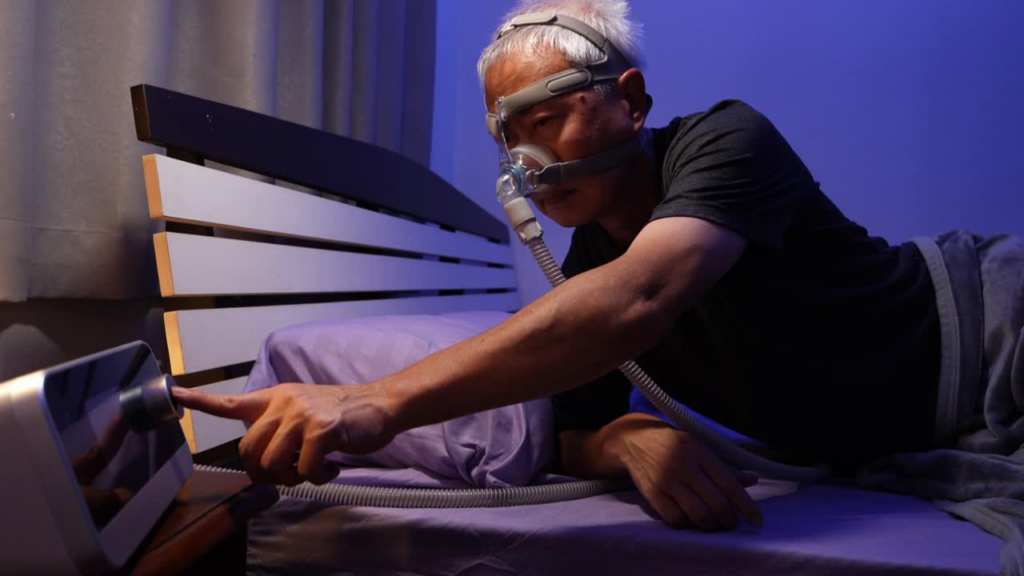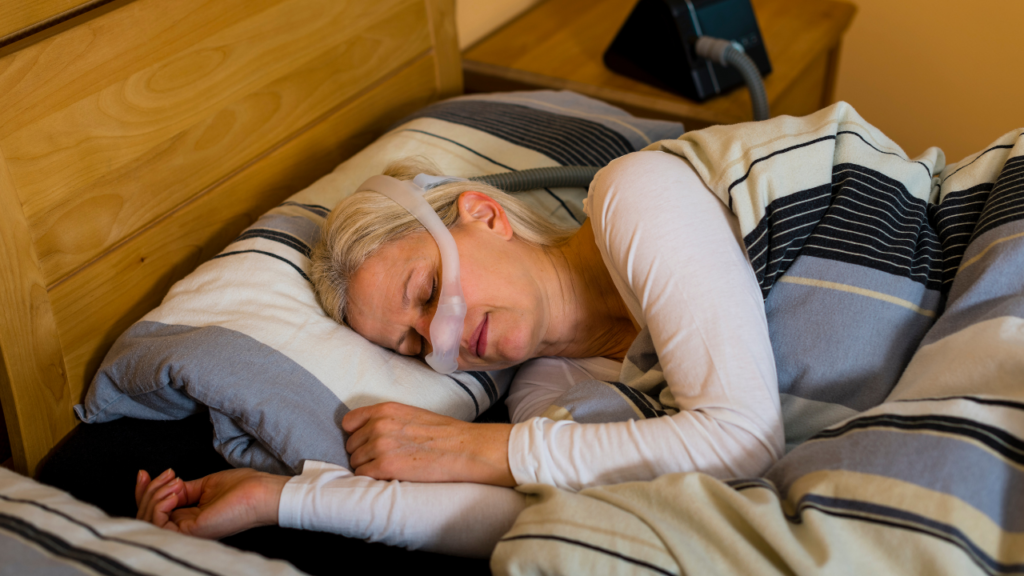
Sleep apnea is more than simply snoring at night. It is a group of sleep-related breathing disorders in which breathing repeatedly stops or becomes significantly reduced during sleep.
Two important types are obstructive sleep apnea (OSA) and central sleep apnea (CSA). Although both can interrupt sleep and cause daytime symptoms, they happen for different reasons.
The simplest distinction is this:
- Obstructive sleep apnea: You try to breathe, but your upper airway becomes blocked or narrowed.
- Central sleep apnea: Your brain temporarily fails to send the appropriate signals that control breathing.
Understanding this difference matters because the underlying cause can affect how sleep apnea is diagnosed and treated.
Obstructive vs. Central Sleep Apnea at a Glance
| Feature | Obstructive Sleep Apnea (OSA) | Central Sleep Apnea (CSA) |
|---|---|---|
| Main problem | Upper airway becomes blocked or narrowed | Reduced or absent respiratory drive |
| Breathing effort during an apnea | Usually continues | Absent during a central apnea |
| Common symptoms | Snoring, gasping, choking, daytime sleepiness | Daytime sleepiness, disrupted sleep, awakenings with shortness of breath |
| Snoring | Common | Can occur, but may be less noticeable |
| Common associations | Upper-airway anatomy, excess weight and other risk factors | Heart conditions, stroke, certain medicines, high altitude and other conditions |
| Diagnosis | Sleep testing | Sleep testing, often requiring assessment of respiratory effort |
| Treatment | Often PAP therapy; oral appliances, positional therapy, weight management or surgery may be considered depending on the person | Treatment depends strongly on the cause and type; PAP or other therapies may be appropriate |
Both conditions can produce similar symptoms, so symptoms alone cannot reliably determine which type a person has.
What Is Obstructive Sleep Apnea?
Obstructive sleep apnea occurs when the upper airway becomes partially or completely blocked during sleep.
When the muscles and tissues around the throat relax, the airway can narrow or collapse. Breathing effort may continue even though airflow is reduced or temporarily stopped.
This is why a person with OSA may appear to struggle to breathe, snore loudly, gasp or briefly choke during sleep.
Common signs of OSA
Symptoms can include:
- Loud or frequent snoring
- Witnessed pauses in breathing
- Gasping or choking during sleep
- Dry mouth on waking
- Morning headaches
- Daytime sleepiness or fatigue
- Difficulty concentrating
- Fragmented sleep
- Mood changes
Not everyone with OSA snores, and not everyone who snores has OSA.
Snoring is therefore a useful warning sign, but it is not a diagnosis.
What Is Central Sleep Apnea?
Central sleep apnea happens when the brain does not send the proper signals to the muscles responsible for breathing during sleep.
In a central apnea, the problem is not primarily a blocked throat. Instead, the normal respiratory drive temporarily decreases or stops.
During a central apnea, there is an absence of both airflow and respiratory effort. This is one of the key physiological differences between central and obstructive apnea.
Symptoms of central sleep apnea
Possible symptoms include:
- Pauses in breathing during sleep
- Sudden awakenings with shortness of breath
- Restless or fragmented sleep
- Excessive daytime sleepiness
- Difficulty concentrating
- Morning headaches
- Mood changes
- Snoring, although it may be less prominent than with OSA
Mayo Clinic notes that snoring can still occur with central sleep apnea. This is important because the presence of snoring does not automatically mean that a person has obstructive sleep apnea.
What Causes Obstructive Sleep Apnea?
OSA develops when the upper airway repeatedly becomes narrowed or blocked during sleep.
Risk can be influenced by several factors, including:
- Anatomy of the throat and upper airway
- Body weight
- Age
- Sleeping position
- Certain structural features of the face and airway
- Alcohol use, which can worsen airway relaxation
- Other individual health factors
Importantly, OSA is not simply a condition caused by body weight. People who are not overweight can also develop obstructive sleep apnea.
Treatment decisions should therefore be based on the individual’s symptoms, risk factors and sleep-study findings rather than weight alone.
What Causes Central Sleep Apnea?
Central sleep apnea has several possible causes.
These can include:
- Heart failure and other heart conditions
- Stroke and certain neurological conditions
- Opioid medicines
- Sleeping at high altitude
- Certain medical conditions affecting breathing control
- Treatment-emergent central sleep apnea
- Primary or idiopathic central sleep apnea, where a specific cause is not identified
Mayo Clinic also identifies treatment-emergent central sleep apnea, which can develop in some people being treated for OSA with CPAP. In some cases it resolves with continued PAP treatment; in others, a different therapy may be needed.
Research also shows that central and obstructive breathing abnormalities can overlap. This is one reason accurate sleep testing is important.
Is Snoring More Common With Obstructive Sleep Apnea?
Yes. Snoring is generally more characteristic of OSA than CSA.
OSA involves narrowing or collapse of the upper airway, which can cause tissues in the airway to vibrate and produce snoring.
However, snoring does not completely rule in OSA. Mayo Clinic specifically notes that people with central sleep apnea can also snore, although it may be less noticeable.
This distinction is useful for anyone searching for answers based only on nighttime sounds.
Snoring alone cannot tell you which type of sleep apnea you have.
How Are OSA and CSA Diagnosed?
A healthcare professional may suspect sleep apnea based on symptoms, medical history and observations from a bed partner.
However, determining whether breathing events are obstructive or central generally requires sleep testing.
Sleep studies
A polysomnogram, commonly called a sleep study, records multiple body signals while you sleep.
Depending on the test, these measurements can include:
- Brain activity
- Eye movements
- Muscle activity
- Heart rhythm
- Airflow
- Blood oxygen levels
- Chest and abdominal movements
- Breathing effort
- Body position
These measurements help clinicians determine what happens when breathing stops or becomes reduced.
A central apnea is characterized by the absence of both airflow and respiratory effort. An obstructive apnea occurs when airflow stops while respiratory effort continues.
Why respiratory effort matters
This is an important technical distinction.
Imagine trying to breathe through a blocked straw. Your body may continue trying to inhale, but the airflow is restricted. That resembles the basic mechanism of an obstructive event.
With a central event, the respiratory effort itself temporarily disappears.
This difference cannot always be determined reliably from symptoms or snoring. It is one reason sleep specialists use physiological measurements during sleep testing.
Can You Have Both Obstructive and Central Sleep Apnea?
Yes.
A person can have both obstructive and central respiratory events. Central events can also emerge during treatment for obstructive sleep apnea.
This is sometimes called treatment-emergent central sleep apnea.
Research suggests that differentiating central and obstructive events can be clinically important because the pattern of breathing abnormalities may influence treatment decisions.
A 2024 study also highlighted an important limitation in sleep-apnea classification: distinguishing central from obstructive hypopneas can be difficult, and failure to distinguish them may affect how central sleep-disordered breathing is characterized. This is an area where ongoing research is relevant.
Are the Symptoms of OSA and CSA the Same?
There is substantial overlap.
Both conditions can cause:
- Poor-quality sleep
- Daytime fatigue
- Excessive sleepiness
- Difficulty concentrating
- Morning headaches
- Mood changes
- Repeated awakenings
But some symptoms may provide clues.
For example, loud snoring, choking and gasping are particularly common with OSA, while recurrent awakenings with shortness of breath may occur with CSA.
These are clues—not diagnostic tests. A healthcare professional needs to determine the underlying type.
Is Central Sleep Apnea More Serious Than Obstructive Sleep Apnea?
There is no simple rule that one type is always “more serious.”
Both conditions can interfere with sleep and affect daytime functioning. Central sleep apnea, however, may sometimes signal an underlying medical problem such as heart failure, stroke or medication effects.
The seriousness of either condition depends on factors such as the type and severity of breathing events, associated health conditions, oxygen levels, symptoms and the underlying cause.
This is why it is better to ask:
What type of sleep apnea do I have, how severe is it, and what is causing it?
rather than simply asking which type is worse.
How Are They Treated?
Treatment is individualized.
Treatment for obstructive sleep apnea
Depending on the person and severity, treatment may include:
- Positive airway pressure therapy such as CPAP
- Oral appliances
- Positional therapy
- Weight management when appropriate
- Limiting alcohol, particularly near bedtime
- Surgery or other airway-focused procedures in selected cases
The appropriate treatment depends on the individual’s anatomy, severity, medical history, preferences and ability to use the treatment consistently.
Treatment for central sleep apnea
CSA treatment is more dependent on why the condition is occurring.
Possible approaches include:
- Treating an underlying medical condition
- Reviewing medications that may contribute to abnormal breathing
- Positive airway pressure therapy
- Supplemental oxygen in selected situations
- Other specialized breathing-support therapies
- Phrenic nerve stimulation in selected patients
Not every treatment is appropriate for every type of CSA.
For example, adaptive servo-ventilation (ASV) requires careful patient selection, particularly in people with certain forms of heart failure. Older research identified safety concerns with ASV in patients with heart failure and reduced ejection fraction, so this therapy should not be considered a general treatment for everyone with central sleep apnea.
Evidence and treatment recommendations can vary according to the specific type and cause of CSA. Patients should discuss specialized therapies with a sleep physician rather than choosing a device based solely on an online comparison.
What About CPAP?
CPAP stands for continuous positive airway pressure.
It delivers a continuous flow of air through a mask to help maintain airway pressure during sleep.
CPAP is a well-established treatment for obstructive sleep apnea. It may also have a role in selected forms of central sleep apnea, but CSA is not simply a blocked-airway problem, so treatment must be tailored to the underlying condition.
If central events appear after CPAP treatment begins, that does not necessarily mean CPAP has permanently failed. Treatment-emergent central sleep apnea can sometimes improve with continued therapy, while some patients require a different approach.
What Are Hypopneas?
You may see the term hypopnea on a sleep-study report.
An apnea generally refers to a temporary cessation of airflow, while a hypopnea involves a reduction in airflow and/or breathing effort rather than complete cessation.
Distinguishing obstructive from central hypopneas can be more complicated than distinguishing classic obstructive and central apneas. Research has identified technical and physiological challenges in making this distinction accurately.
This is one reason you should not try to interpret an entire sleep-study report based on one number alone.
What Is the AHI?
The apnea-hypopnea index (AHI) is commonly used in sleep medicine to describe the number of apneas and hypopneas occurring per hour of sleep.
A sleep report may provide an overall AHI and, depending on the study, additional information about obstructive and central events.
However, the AHI is only one part of the clinical picture.
A healthcare professional may also consider:
- The type of respiratory events
- Oxygen levels
- Sleep stages
- Sleep position
- Symptoms
- Medical conditions
- Medication use
- The pattern of breathing during the study
This broader assessment is particularly important when central events are present.
When Should You Talk With a Healthcare Professional?
Consider discussing a sleep evaluation with a healthcare professional if you or a bed partner notices:
- Repeated pauses in breathing
- Loud or persistent snoring
- Gasping or choking during sleep
- Repeated nighttime awakenings
- Waking up short of breath
- Significant daytime sleepiness
- Difficulty concentrating
- Morning headaches
- Persistent fatigue despite getting enough time in bed
Mayo Clinic specifically recommends medical evaluation when breathing pauses, nighttime shortness of breath or significant daytime drowsiness occur.
If daytime sleepiness is severe enough that you are struggling to stay awake while driving or performing other safety-sensitive activities, seek medical advice promptly and avoid driving while dangerously sleepy.
Frequently Asked Questions
Is central sleep apnea the same as obstructive sleep apnea?
No.
OSA occurs when the upper airway becomes blocked or narrowed during sleep. CSA occurs when the brain temporarily fails to generate the normal signals needed to maintain breathing.
Which type causes snoring?
Snoring is more commonly associated with OSA, but it can also occur with CSA. Therefore, snoring alone cannot determine the type of sleep apnea.
Can you have central and obstructive sleep apnea at the same time?
Yes. A person can experience both types of respiratory events.
Central events can also appear during treatment for OSA, a phenomenon known as treatment-emergent central sleep apnea.
Can CPAP treat central sleep apnea?
CPAP is a primary treatment for OSA and may be used in selected cases of CSA. However, central sleep apnea has multiple causes, so treatment should be based on the specific type and underlying condition.
Does central sleep apnea always cause symptoms?
No. Symptoms can vary, and some people may have relatively few noticeable symptoms. This is one reason objective sleep testing can be important when CSA is suspected.
Can snoring happen without sleep apnea?
Yes.
Snoring can occur without sleep apnea. Persistent or loud snoring becomes more concerning when it occurs with witnessed breathing pauses, gasping, choking or significant daytime sleepiness.
Can sleep apnea be cured?
Treatment can effectively control sleep apnea for many people, but whether it resolves completely depends on the type, cause and individual circumstances.
Some people require ongoing treatment or monitoring.
The Bottom Line
Obstructive and central sleep apnea are different problems that can look similar from the outside.
With obstructive sleep apnea, the person continues making an effort to breathe, but the upper airway becomes blocked or narrowed.
With central sleep apnea, the respiratory drive temporarily decreases or stops, resulting in absent breathing effort during the central event.
The distinction matters because the causes, diagnostic findings and treatment approaches can differ.
If you snore, wake up gasping, experience witnessed breathing pauses or feel unusually sleepy during the day, do not assume the problem is simply snoring. A healthcare professional can determine whether sleep apnea is present and, when appropriate, use sleep testing to identify the type.
Good sleep health starts with understanding what is actually happening while you sleep.
Medical Disclaimer
This article is for educational purposes only and is not a substitute for medical diagnosis or treatment. Sleep apnea can have different causes and may require individualized testing and care. If you suspect that you or someone you care about has sleep apnea, speak with a qualified healthcare professional or sleep specialist.
References
- American Association of Sleep Technologists (AAST). Obstructive vs. Central Sleep Apnea: Key Differences and Treatment Options. November 17, 2022. AAST article
- Health. Gordon S. Central Sleep Apnea vs. Obstructive Sleep Apnea: Which Is More Serious? Medically reviewed by Sanja Jelic, MD. Updated August 21, 2026. Health article
- Healthline. Central vs. Obstructive Sleep Apnea: Differences and FAQs. Healthline article
- Mayo Clinic. Central Sleep Apnea — Symptoms and Causes. Mayo Clinic article
- Badr MS, Dingell JD, Javaheri S. Central Sleep Apnea: A Brief Review. Current Pulmonary Reports. 2019;8(1):14–21. PubMed Central article
- Distinguishing obstructive versus central apneas in sleep. Peer-reviewed literature available through PubMed Central. PubMed Central
- ScienceDirect. Sleep Medicine research article — PII: S1389945725001467. ScienceDirect article
- ScienceDirect. Sleep Medicine research article — PII: S1389945724004611. ScienceDirect article
- American Journal of Respiratory and Critical Care Medicine. Sleep-disordered breathing research article. American Journal of Respiratory and Critical Care Medicine. 172(11):1363. AJRCCM article
- CHEST Journal. Sleep-disordered breathing research article. CHEST article