Introduction
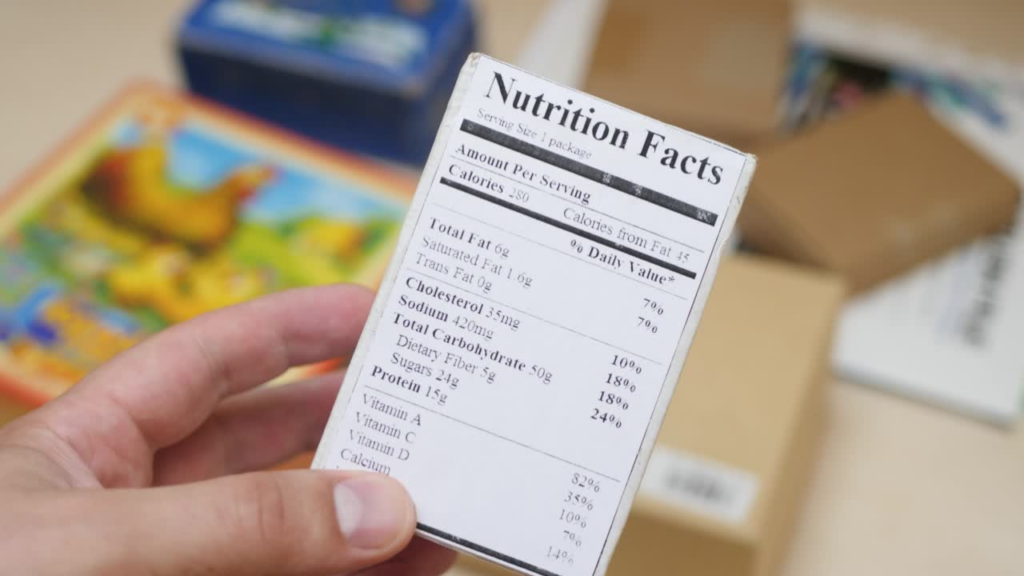
Walk through a grocery store and you will see food packages covered with messages such as “natural,” “high protein,” “low fat,” “whole grain,” “no added sugar,” and “heart healthy.”
These statements can be useful, but they do not tell the whole story.
The Nutrition Facts label provides standardized information that can help you compare packaged foods. Yet knowing where to look is only the first step. You also need to understand what the numbers mean and how they relate to the food you actually eat.
Research shows that people do not always find nutrition labels easy to understand or use. A large international study involving more than 64,000 adults in Australia, Canada, Mexico, the United Kingdom, and the United States found substantial differences in how often people used labels and how easy they found them to understand.
The good news is that reading food labels is a skill that can be learned.
This guide explains how to approach a food label systematically—much like a nutrition professional would.
Why Learning to Read Food Labels Matters
Food labels can help you compare products, identify nutrients you may want more or less of, and make decisions that fit your dietary needs.
The U.S. Food and Drug Administration (FDA) regulates the Nutrition Facts label used on packaged foods in the United States. The standardized format is designed to make nutrition information easier to compare between products.
However, simply putting information on a package does not guarantee that consumers will understand it.
A systematic review of 17 studies found that educational interventions improved at least one measure of participants’ understanding or use of nutrition labels. The researchers also highlighted the importance of nutrition knowledge, health literacy, and numeracy.
In other words, food-label literacy is an important practical nutrition skill.
The Nutrition Expert’s Approach to Food Labels
Instead of trying to read every number on the package, use a consistent sequence.
The five-step approach
- Check the serving size.
- Look at calories in relation to the amount you actually eat.
- Examine nutrients you want more or less of.
- Use % Daily Value to put numbers into context.
- Read the ingredient list and evaluate the product as a whole.
This approach can make grocery shopping faster and more purposeful.
1. Start With Serving Size
Serving size should be your first stop.
The Nutrition Facts label provides a serving size and the number of servings in the package. Importantly, serving size is not a recommendation of how much you should eat. It is a standardized reference amount intended to help consumers compare products.
For example, imagine a packaged food contains:
| Label information | Amount |
|---|---|
| Serving size | 1 cup |
| Calories | 250 |
| Sodium | 500 mg |
| Protein | 10 g |
If you eat 2 cups, you have consumed two servings.
That means you would consume approximately:
- 500 calories
- 1,000 mg sodium
- 20 g protein
The same principle applies to the other nutrients listed on the label.
A common mistake
Many people look at the calorie number first and forget to check the serving size.
That can make a food appear lower in calories than the amount they actually consume.
Expert habit: Before judging any number on the label, ask:
“How much of this food am I actually going to eat?”
2. Look at Calories in Context
Calories indicate the amount of energy provided by a serving of food.
The FDA uses 2,000 calories per day as a general reference for nutrition labeling, but individual calorie requirements can be higher or lower depending on factors such as age, sex, body size, and physical activity.
Therefore, 200 calories does not automatically mean a food is “healthy,” just as 500 calories does not automatically mean it is “unhealthy.”
Consider what comes with those calories.
A food providing 200 calories along with protein, fiber, vitamins, and minerals is nutritionally different from a 200-calorie product that provides mostly added sugars and little nutritional value.
Calories tell you how much energy you are getting. The nutrient profile helps tell you what else you are getting with that energy.
3. Pay Attention to Nutrients You May Want More Of
The Nutrition Facts label can help you identify foods that contribute useful nutrients.
Depending on your individual dietary needs, nutrients to pay attention to include:
- Dietary fiber
- Calcium
- Vitamin D
- Iron
- Potassium
- Protein
The FDA identifies dietary fiber, vitamin D, calcium, iron, and potassium among the nutrients consumers may benefit from getting more of.
Why fiber deserves special attention
Fiber is found naturally in foods such as:
- Beans and lentils
- Vegetables
- Fruits
- Whole grains
- Nuts and seeds
When comparing similar packaged foods, a product with more dietary fiber may be a useful choice, particularly when the rest of its nutritional profile also fits your needs.
4. Watch Nutrients You May Want Less Of
Three nutrients deserve particular attention on many packaged foods:
Saturated fat
Saturated fat is listed separately from total fat.
The type of fat matters, not simply the total amount of fat. The FDA recommends paying attention to saturated fat and choosing foods with lower amounts when appropriate.
Sodium
Sodium is commonly found in processed and packaged foods.
The Nutrition Facts label tells you how much sodium is contained in a serving. Comparing similar products can help you identify options with less sodium.
This can be particularly useful for people who have been advised by a healthcare professional to limit sodium.
Added sugars
Added sugars are different from naturally occurring sugars.
This distinction is important because total sugars include both naturally occurring sugars and added sugars.
For example, milk and fruit naturally contain sugars. Added sugars are incorporated during processing or preparation.
On the label, “Total Sugars” includes “Added Sugars.”
5. Understand % Daily Value
The % Daily Value (%DV) is one of the most useful parts of the Nutrition Facts label.
It tells you how much a nutrient in one serving contributes to the Daily Value for that nutrient.
The FDA provides a simple rule of thumb:
| % Daily Value | General interpretation |
|---|---|
| 5% DV or less | Low |
| 20% DV or more | High |
These percentages are based on established Daily Values used for food labeling.
How to use this information
When comparing similar products, you can generally look for:
Higher %DV of:
- Dietary fiber
- Calcium
- Vitamin D
- Iron
- Potassium
Lower %DV of:
- Saturated fat
- Sodium
- Added sugars
This does not mean every person should follow the same target. Individual nutrition needs can differ.
6. Don’t Confuse Total Sugars With Added Sugars
This is one of the most important label-reading skills.
Suppose a yogurt contains:
- Total sugars: 15 g
- Added sugars: 7 g
The remaining 8 grams can come from naturally occurring sugars.
The FDA explains that the added-sugar amount is included within the total-sugar amount; it is not added on top of total sugars.
A simple way to remember it
Total sugars = naturally occurring sugars + added sugars
Therefore, seeing a relatively high total-sugar number does not automatically mean that all of the sugar was added.
7. Read the Ingredient List
The Nutrition Facts panel tells you about nutrient quantities.
The ingredient list tells you what the food is made from.
When evaluating a packaged food, look beyond the front of the package and examine the ingredients.
Look for recognizable ingredients that fit your dietary goals.
For example, if you are choosing a whole-grain product, you can examine the ingredient list rather than relying solely on a prominent front-of-package statement.
Why this matters
A product can carry a nutrition-related marketing message while still containing substantial amounts of other nutrients you may want to limit.
USDA Economic Research Service research notes that food packages can contain numerous voluntary claims and that multiple claims can sometimes compete for consumers’ attention or create confusion.
The front of the package attracts attention. The Nutrition Facts panel and ingredient list provide more detailed information.
8. Be Careful with “Healthy-Sounding” Claims
Food packaging often uses terms designed to communicate a desirable attribute.
Examples include:
- Natural
- Organic
- High protein
- Low fat
- No added sugar
- Whole grain
- Gluten-free
- Non-GMO
These terms do not all mean the same thing, and their regulatory definitions differ.
For example, certain claims such as “gluten-free” are subject to specific FDA criteria, while “organic” has USDA regulatory requirements.
The term “natural” also deserves caution.
USDA’s Economic Research Service notes that consumers may associate “natural” with healthier choices, while labeling terminology and regulatory oversight vary by product category and claim.
The key lesson
Do not let one attractive claim make the entire purchasing decision.
Instead, use the claim as a reason to investigate further.
9. Compare Similar Foods Side by Side
One of the most powerful ways to use food labels is comparison.
Suppose you are choosing between two breakfast cereals.
| Nutrient | Cereal A | Cereal B |
|---|---|---|
| Calories | 190 | 210 |
| Fiber | 3 g | 6 g |
| Added sugars | 10 g | 5 g |
| Sodium | 220 mg | 140 mg |
| Protein | 4 g | 7 g |
Rather than asking which package looks healthier, compare the actual nutrition information.
Cereal B may be preferable for someone prioritizing higher fiber, lower added sugar, lower sodium, and more protein.
However, the “best” choice still depends on the person’s overall diet and individual needs.
10. Understand Front-of-Package Labels
Some countries use simplified nutrition information on the front of food packages.
These systems can include:
- Warning symbols
- Traffic-light systems
- Health Star Ratings
- Guideline Daily Amounts
Research examining adults in five countries found that front-of-package labeling systems can differ considerably in visibility, use, and perceived understanding. In that study, warning labels in Mexico were associated with higher reported awareness, use, and understanding than some other systems.
However, the researchers also emphasized that the evidence needs continued monitoring, particularly regarding actual health effects.
This is an important distinction:
A label can be easy to understand without necessarily proving that it improves long-term health outcomes.
The international review by Meijer and colleagues similarly emphasized the need for continued research into how labeling affects consumer behavior and health outcomes.
A Nutrition Expert’s Grocery-Store Checklist
You do not need to memorize every nutrient on a label.
Use this quick process.
Before putting a packaged food in your cart:
- Check the serving size.
- Check servings per container.
- Consider how much you will actually eat.
- Look at calories.
- Check added sugars.
- Check sodium.
- Check saturated fat.
- Look for dietary fiber.
- Consider protein when relevant to your dietary needs.
- Use %DV to compare products.
- Read the ingredient list.
- Look beyond front-of-package claims.
- Compare similar products.
This process can become automatic with practice.
Common Food-Label Mistakes
Mistake 1: Looking only at calories
Calories matter, but they do not tell you everything about nutritional quality.
Better approach: Look at calories together with protein, fiber, saturated fat, sodium, added sugars, and other nutrients relevant to your needs.
Mistake 2: Assuming one package equals one serving
Some packages contain multiple servings.
Better approach: Always check servings per container.
Mistake 3: Treating “natural” as synonymous with “healthy”
A marketing claim does not replace the Nutrition Facts panel.
Better approach: Evaluate the entire label.
Mistake 4: Confusing total sugar with added sugar
Total sugars can include naturally occurring sugars.
Better approach: Look specifically at the Added Sugars line.
Mistake 5: Ignoring serving size when comparing foods
A product may appear to contain less of a nutrient simply because its listed serving is smaller.
Better approach: Compare similar products using the same serving basis when possible.
Mistake 6: Assuming %DV is a personal prescription
%DV is a standardized reference tool, not an individualized diet plan.
Better approach: Use it to understand relative amounts and then consider your personal nutrition needs.
What Does “5% DV” or “20% DV” Mean?
A simple rule can make the label much easier to interpret.
5% DV or less
Generally considered low for that nutrient.
20% DV or more
Generally considered high for that nutrient.
For nutrients you are trying to limit, such as sodium, saturated fat, and added sugars, a lower %DV may be preferable.
For nutrients you are trying to obtain more of, such as dietary fiber, a higher %DV may be useful.
The FDA specifically recommends using %DV as a tool for identifying foods higher or lower in particular nutrients.
How Adults Over 35 Can Use Food Labels More Effectively
Nutrition priorities can change throughout adulthood.
Rather than following a one-size-fits-all approach, consider which nutrients matter most for your individual situation.
For example, someone may be particularly interested in:
- Fiber
- Protein
- Calcium
- Vitamin D
- Potassium
- Sodium
- Saturated fat
- Added sugars
A person managing a health condition may have additional dietary considerations.
If you have diabetes, kidney disease, cardiovascular disease, high blood pressure, or another condition requiring dietary management, your nutrition priorities may differ. A registered dietitian or healthcare professional can help translate label information into an individualized eating plan.
Food Labels Are Tools—Not Complete Measures of Food Quality
A Nutrition Facts label is useful, but it does not provide a complete picture of a person’s diet.
For example, it does not tell you everything about:
- Overall dietary pattern
- Food preparation
- Meal balance
- Variety
- Portion habits
- Eating frequency
- Food enjoyment
- Cultural food preferences
It is therefore more useful to think of the label as a decision-making tool rather than a simple “good food” or “bad food” score.
The USDA Economic Research Service notes that food labeling can improve access to information but also recognizes that labels can sometimes be difficult for consumers to interpret and may create confusion when many claims appear together.
Why Food-Label Education Matters
Research suggests that nutrition-label comprehension is not simply a matter of motivation.
It can involve:
- Nutrition knowledge
- Numeracy
- Health literacy
- Label design
- Education
- Time available for decision-making
The systematic review of educational interventions found improvements in nutrition-label understanding or use across all 17 included studies, although the interventions and outcomes varied.
CDC research summaries likewise highlight challenges related to literacy and numeracy when people interpret nutrition information.
This means learning a few basic label-reading skills can make a meaningful practical difference in grocery shopping.
Frequently Asked Questions
What should I look at first on a food label?
Start with serving size and servings per container. All the nutrient amounts on the Nutrition Facts label refer to the listed serving size.
What is a good % Daily Value?
As a general labeling guide, 5% DV or less is considered low, while 20% DV or more is considered high. Whether high or low is desirable depends on the nutrient.
Is a food with fewer calories always healthier?
No. Calories indicate energy, but they do not describe the entire nutritional profile of a food.
What is the difference between total sugar and added sugar?
Total sugar includes naturally occurring sugars and added sugars. Added sugar is the portion added during processing or preparation.
Should I avoid all foods with sugar?
Not necessarily. Naturally occurring sugars are found in foods such as fruit and milk. The label distinguishes total sugars from added sugars, allowing you to evaluate them separately.
Is “natural” always healthier?
No. “Natural” is not a substitute for evaluating the complete Nutrition Facts panel and ingredient list. The meaning and regulation of labeling claims can vary by product category.
Should I focus on ingredients or Nutrition Facts?
Both provide different information. The Nutrition Facts panel describes nutrient amounts, while the ingredient list shows what ingredients make up the product.
Can food labels help with healthy eating?
Yes. Nutrition labels provide information that can help consumers compare products and make choices consistent with their dietary goals. However, research indicates that understanding and using labels can be challenging, making nutrition education important.
The SUNDRG HEALTH Takeaway
You do not need to become a dietitian to become better at reading food labels.
You need a reliable process.
Check the serving size.
Look at calories.
Compare key nutrients.
Pay attention to added sugars, sodium, and saturated fat.
Look for fiber and other nutrients you want more of.
Use % Daily Value for context.
Read the ingredient list.
And don’t let front-of-package marketing claims make the decision for you.
Most importantly, look at the whole nutritional picture rather than judging a food by one number or one marketing phrase.
Food labels are designed to give you information. Learning how to interpret that information gives you greater control over your everyday food choices.
SUNDRG HEALTH — Healing from Nature, Health for Life.
References
- U.S. Food and Drug Administration. (n.d.). How to Understand and Use the Nutrition Facts Label. FDA.
- U.S. Department of Agriculture, Economic Research Service. (2026). Consumer Information and Labeling – Food Labeling. USDA ERS.
- Centers for Disease Control and Prevention. (n.d.). Nutrition Facts Label and Your Health. CDC.
- U.S. Department of Agriculture. (n.d.). Food Labels. Nutrition.gov.
- U.S. Food and Drug Administration. (n.d.). Nutrition Education Resources & Materials. FDA.
- Harvard T.H. Chan School of Public Health, The Nutrition Source. (n.d.). Food Label Guide. Harvard University.
- Centers for Disease Control and Prevention. (n.d.). Food Literacy. CDC.
- Food Labeling Analysis: Understanding and Perception. (2021). ResearchGate. ResearchGate source provided for this article
- Food Labeling and Consumer Choices: A Critical Analysis. (2024). ResearchGate. ResearchGate source provided for this article
- Food Labeling and Consumer Choices: A Critical Analysis. Research source supplied for this article. ResearchGate publication