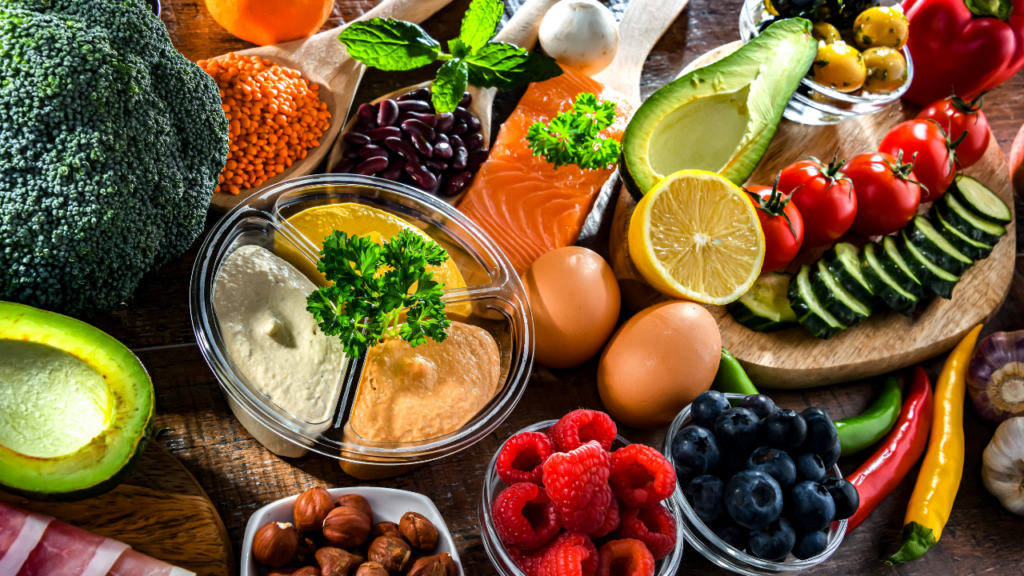
A diabetic diet plan does not have to mean eliminating carbohydrates or following a strict list of forbidden foods.
Current diabetes nutrition guidance focuses more on healthy eating patterns, nutrient-dense foods, appropriate portions, and individualized meal planning. There is no single eating pattern that is best for every person with diabetes.
The right approach depends on factors such as your medications, health goals, food preferences, lifestyle, and other medical conditions.
The Diabetes Plate Method
One practical way to build a balanced meal is the plate method:
| Plate | What to include |
|---|---|
| ½ plate | Non-starchy vegetables |
| ¼ plate | Protein |
| ¼ plate | Quality carbohydrate |
| Small amount | Healthy fat |
| Drink | Water or unsweetened beverage |
Examples of non-starchy vegetables include broccoli, spinach, tomatoes, peppers, cauliflower, cucumbers, and green beans.
Protein choices can include fish, chicken, eggs, beans, lentils, and tofu.
Carbohydrate choices can include beans, whole grains, brown rice, quinoa, and whole fruit.
Mayo Clinic and current ADA guidance both describe plate-based meal planning as a practical approach to balanced diabetes eating.
Best Foods to Include
Focus your meals around:
- Non-starchy vegetables
- Beans and lentils
- Whole fruits
- Whole grains
- Fish and other lean proteins
- Nuts and seeds
- Avocado
- Olive oil
- Plain yogurt or suitable dairy alternatives
Current ADA guidance specifically emphasizes non-starchy vegetables, whole fruits, legumes, lean proteins, whole grains, nuts and seeds, and appropriate dairy or nondairy alternatives.
Foods to Limit
Limit foods and drinks that provide large amounts of added sugar, refined carbohydrates, saturated fat, or calories without much nutritional value.
Examples include:
- Sugary drinks
- Candy
- Cakes
- Cookies
- Pastries
- Refined grains
- Highly processed snack foods
- Processed meats
- Fried foods
This does not mean every one of these foods must be permanently eliminated. The goal is to make nutrient-dense foods the foundation of your eating pattern.
What About Carbohydrates?
Carbohydrates generally have the greatest immediate effect on blood glucose because they are broken down into glucose.
But this does not mean everyone with diabetes needs to eliminate carbohydrates.
The more useful questions are:
- What type of carbohydrate am I eating?
- How much am I eating?
- How much fiber does it contain?
- What other foods am I eating with it?
Whole grains, legumes, vegetables, and whole fruits provide nutrients and fiber, while refined carbohydrates and sugary foods generally provide fewer nutritional benefits.
Is a Low-Carb Diet Better?
A lower-carbohydrate approach can be useful for some adults with type 2 diabetes, but it is not automatically the best choice for everyone.
Evidence supports several dietary approaches, including Mediterranean-style, plant-based, and lower-carbohydrate patterns. The important point is that the approach should be individualized and nutritionally adequate.
If you use insulin or medications that can cause hypoglycemia, major changes in carbohydrate intake should be discussed with your healthcare team.
Is the Mediterranean Diet Good for Diabetes?
Mediterranean-style eating emphasizes:
- Vegetables
- Fruits
- Beans
- Whole grains
- Nuts
- Seeds
- Olive oil
- Fish
- Minimally processed foods
Research supports Mediterranean-style eating as one reasonable dietary pattern for many people with type 2 diabetes, although no single diet is universally superior.
7-Day Meal Example
Day 1:
Oatmeal with berries and walnuts → chicken salad with chickpeas → salmon, broccoli and brown rice.
Day 2:
Greek yogurt with berries → lentil vegetable soup → chicken, cauliflower and quinoa.
Day 3:
Eggs with spinach and whole-grain toast → tuna vegetable salad → beans, vegetables and brown rice.
Day 4:
Oatmeal with apple and chia → salmon salad → chicken vegetable stir-fry.
Day 5:
Vegetable omelet → chickpea salad → fish, green beans and quinoa.
Day 6:
Plain yogurt with berries and flaxseed → chicken lettuce wraps → lentil stew and vegetables.
Day 7:
Eggs and vegetables → Mediterranean chickpea salad → grilled chicken or fish with roasted vegetables and brown rice.
The Bottom Line
A healthy diabetic diet plan does not need to be complicated.
Start with:
½ vegetables + ¼ protein + ¼ quality carbohydrate + a small amount of healthy fat.
Choose nutrient-dense foods more often and limit sugary drinks, refined grains, highly processed foods, and excess saturated fat.
Most importantly, diabetes nutrition should be personalized. The 2026 ADA Standards emphasize individualized medical nutrition therapy rather than a one-size-fits-all diet.
SUNDRG HEALTH Disclaimer: This article is for educational purposes only and is not medical advice. People with diabetes should work with their healthcare professional or registered dietitian for individualized nutrition guidance.
FREE DIABETIC DIET GUIDE
Learn how to build balanced meals and create a practical 7-day diabetes meal plan.
You’ll receive:
- Diabetes Plate Method
- Foods to eat more often
- Foods to limit
- Carbohydrate guidance
- 7-day meal ideas
- Practical meal-prep tips
Then:
Get your free guide by entering your email below.
By submitting this form, you agree to receive emails from SUNDRG HEALTH. You can unsubscribe at any time. Please review our Privacy Policy.