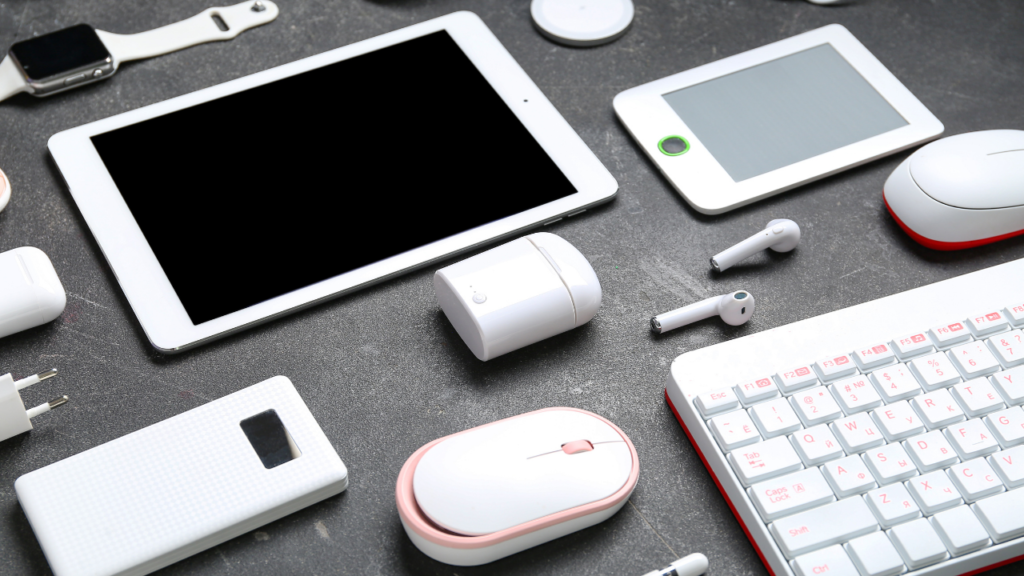
Consumer electronics have transformed the way people live, work, communicate, and enjoy entertainment. What began with simple analog devices has grown into a world of smart, connected products that fit into our pockets. Today’s gadgets are faster, smaller, and more powerful than ever before. This evolution has changed not only technology but also daily life and consumer expectations.
What Are Consumer Electronics?
Consumer electronics are electronic devices designed for everyday personal use. They help people communicate, stay informed, work, learn, and have fun.
Common examples include:
- Smartphones
- Televisions
- Laptops
- Tablets
- Smartwatches
- Cameras
- Gaming consoles
- Wireless headphones
- Smart home devices
- Bluetooth speakers
Unlike industrial or medica equipment, these products are made for ordinary consumers.
The Early Years: The Analog Era
Before digital technology, nearly every electronic device was analog. These products relied on continuous electrical signals instead of computer chips. While groundbreaking at the time, they were larger, slower, and offered fewer features.
Many families owned only a few electronic devices because they were expensive and lasted for many years.
Popular analog electronics included:
- Radio receivers
- Vinyl record players
- Cassette players
- Film cameras
- CRT televisions
- VHS video recorders
- Corded telephones
These products laid the foundation for today’s digital world.
Timeline of Consumer Electronics
| Period | Major Technology | Popular Products |
|---|---|---|
| 1920s–1940s | Radio Age | Radios |
| 1950s | Television Boom | Black-and-white TVs |
| 1960s | Portable Electronics | Transistor radios |
| 1970s | Home Entertainment | Color TVs, cassette players |
| 1980s | Personal Computing | PCs, VCRs, Walkman |
| 1990s | Digital Revolution | CDs, DVDs, mobile phones |
| 2000s | Internet Era | Laptops, MP3 players, digital cameras |
| 2010s | Smartphone Era | Smartphones, tablets, smart TVs |
| 2020s | Smart Living | AI devices, wearables, smart homes |
The Digital Revolution
The biggest turning point came when digital technology replaced analog systems. Digital devices could process information more accurately and store much more data. They also became easier to upgrade with software instead of replacing hardware.
Consumers quickly embraced products that were faster, smaller, and more reliable.
Major digital innovations included:
- Compact Discs (CDs)
- DVDs
- Digital cameras
- MP3 players
- Personal computers
- Mobile phones
- LCD televisions
This period marked the beginning of today’s connected lifestyle.
The Rise of Personal Computers
During the 1980s and 1990s, personal computers became common in homes. At first, they were mainly used for school and office work. As internet access expanded, computers became essential for communication, shopping, entertainment, and learning.
This shift changed the way families used technology every day.
The Internet Changed Everything
The arrival of the internet connected consumer electronics in ways that had never been possible. Devices could now exchange information instantly across the world. Email, online shopping, digital banking, and video streaming became everyday activities.
The internet also made software updates possible, allowing devices to improve over time instead of becoming outdated immediately.
Smartphones Replaced Multiple Devices
Perhaps no invention changed consumer electronics more than the smartphone. Instead of carrying several separate devices, people could do almost everything from one handheld product.
A modern smartphone replaces:
- Camera
- GPS navigator
- Calculator
- Alarm clock
- Music player
- Flashlight
- Video recorder
- Calendar
- Notebook
- Wallet (digital payments)
This convenience made smartphones one of the most successful consumer products in history.
Smart Homes Become Reality
Consumer electronics are no longer limited to phones and computers. Homes themselves have become connected through smart devices that communicate over the internet.
Examples include:
- Smart thermostats
- Video doorbells
- Voice assistants
- Smart lights
- Smart locks
- Robot vacuum cleaners
- Home security cameras
- Smart appliances
These products make everyday tasks easier while improving energy efficiency and home security.
Artificial Intelligence Enters Consumer Electronics
Artificial intelligence (AI) is changing how electronic devices work. Instead of simply following commands, modern gadgets can learn user preferences and automate many tasks.
Today, AI helps devices:
- Recognize voices
- Improve photos
- Translate languages
- Recommend entertainment
- Answer questions
- Detect health patterns
- Reduce battery usage
As AI improves, electronics are becoming more helpful and personalized.
Smaller, Faster, and More Powerful
One of the biggest trends in consumer electronics is miniaturization. Engineers continue to make devices smaller while increasing their performance.
Modern electronics offer:
- Faster processors
- Better battery life
- Higher storage capacity
- Better cameras
- Brighter displays
- Wireless connectivity
- Lower energy consumption
Consumers now expect powerful technology in lightweight, portable devices.
The Growth of Wearable Technology
Wearable electronics have become one of the fastest-growing product categories. These devices collect health information while staying connected to smartphones.
Popular wearables include:
- Smartwatches
- Fitness trackers
- Smart rings
- Wireless earbuds
- Health monitors
Many can measure heart rate, sleep quality, physical activity, blood oxygen levels, and more.
Sustainability Challenges
While consumer electronics continue to improve, they also create environmental challenges. Devices are replaced more frequently than in the past, increasing demand for raw materials and generating more electronic waste (e-waste). Researchers note that rapid product turnover has become a significant sustainability concern.
Major concerns include:
- Electronic waste
- Battery disposal
- Rare earth mineral mining
- Energy use during manufacturing
- Plastic packaging
- Carbon emissions
Governments and manufacturers are responding with better recycling programs, repair initiatives, and more sustainable product designs. Extending the life of electronics through reuse, refurbishment, and recycling can reduce environmental impacts.
Future Trends
Consumer electronics continue to evolve at a rapid pace. Over the next decade, several technologies are expected to shape the industry.
Future innovations may include:
- AI-powered personal assistants
- Foldable and rollable displays
- Augmented Reality (AR) glasses
- Virtual Reality (VR) devices
- Smarter home automation
- Improved battery technology
- More sustainable manufacturing
- Advanced health-monitoring wearables
These innovations aim to make technology more useful, efficient, and environmentally responsible.
Benefits of Modern Consumer Electronics
Modern electronics have improved everyday life in many ways.
Some of the biggest benefits include:
- Faster communication
- Better access to information
- Remote work opportunities
- Online education
- Digital entertainment
- Health monitoring
- Greater convenience
- Improved productivity
Technology continues to simplify tasks that once required much more time and effort.
Conclusion
The evolution of consumer electronics is a story of constant innovation. From bulky analog radios and televisions to AI-powered smartphones and smart homes, technology has dramatically changed the way people live. Each generation of devices has become smaller, faster, and more capable than the last.
Looking ahead, consumer electronics will continue to become smarter, more connected, and more sustainable. As new technologies emerge, the focus will not only be on performance but also on designing products that last longer, use resources more efficiently, and reduce environmental impact.
References
International Electronics & Smart Appliances Expo (IEAE). (n.d.). The evolution of consumer electronics. https://global.iteschina.com/en/news/details/2747
McEachern, I. C. (2023). The evolution of consumer electronics: From analog to digital. https://www.iancollmceachern.com/single-post/the-evolution-of-consumer-electronics-from-analog-to-digital
1993 Magazine. (2023). The evolution of consumer technology: History. https://1993magazine.com/the-evolution-of-consumer-technology-history/
Babbitt, C. W., Gaustad, G., Fisher, A., Chen, W. Q., & Liu, G. (2021). Closing the loop on circular economy research: The consumer electronics industry. Journal of Industrial Ecology. https://doi.org/10.1111/jiec.13074
Williams, E. D., Ayres, R. U., & Heller, M. (2002). The 1.7 kilogram microchip: Energy and material use in the production of semiconductor devices. Environmental Science & Technology. https://www.sciencedirect.com/science/article/abs/pii/S0166497299001522